JOURNALS: Intrepid tour in Peru
The tour started in Lima and ended in La Paz, Bolivia. The key parts of Peru covered by the tour were 1. Puerto Maldonado for the Amazon, 2. Quarry trail trek & Machu Picchu and 3. Lake Titicaca. The tour spanned 15 days and it was the initial leg of a longer trip. We had 16 participants on the tour (the max number), and about half of them continued on to Buenos Aires after my tour ended in La Paz, Bolivia.
Day 0 - 1: Lima
I knew little about Peru before visiting, and almost nothing about Lima other than it being known as the culinary capital of South America. My first thought flying into Lima was “oh this place looks browner than I expected”. I didn’t realise how dry Lima was - Lima actually has a desert climate and is one of the driest capitals in the world.
I had arranged with the service Quickllama for a shared pickup (5USD only!) to drop me off at my B&B for the night. It was.. not as official as it looked on the website but they were responsive over whatsapp and they got me to where I needed to be. The other lady on the trip was French and couldn’t speak Spanish or English. I couldn’t speak Spanish, but our last passenger was also French and could speak all 3 languages. He acted as the translator for the rest of the ride. I tried my best to listen in as he conversed with the driver in Spanish, and learnt that the driver was Venezuelan. The ride was fine (we did see a traffic accident along the way eeps) and the good thing about this service is that they drop you at your accommodation rather than a central location. However, if you want a more official service there is also the Airport Express Lima which is an official bus in front of the airport, or you can also get a private transfer for pretty decent rates (maybe around 20-25USD?).
Having arrived in Lima the day before my tour, I stayed in Lighthouse B&B which was just a couple of streets down from the meeting point. The owner of the B&B was a guide himself for a UK company, and he provided useful tips such as ATMs to go to for lower fees, and to make sure to withdraw USD before going into Bolivia. The B&B room was absolutely lovely with its own private toilet, and had everything that I needed! It had all the little touches - hangers for towers and clothes in the bathroom, a cup to put your toothbrush and toothpaste by the sink, a bedside table and table lamp by the bed (very important because then you can turn off the overhead light and still do things, and don’t have to crawl out of bed right before sleeping). These little things make a big difference when travelling for a while, and if I could have stayed longer there I would have!
At breakfast, I met another girl from Belgium who was going to be on the same tour as me (it seems many travellers stay at this B&B before / after tours by Intrepid or G Adventures as the hotel meeting point is very near). We decided to explore together before heading to the meeting point at 1pm - so this eventually led us to becoming room mates for the rest of the trip!
As you walk down the coast in Lima, you’ll find several surfers in the water waiting for a wave. This is the Pacific Coast, cold due to the Humboldt current (which pushes warm surface water away and allows cold water to arrive from the deep ocean). The cold current also creates the fog that engulfs the city.
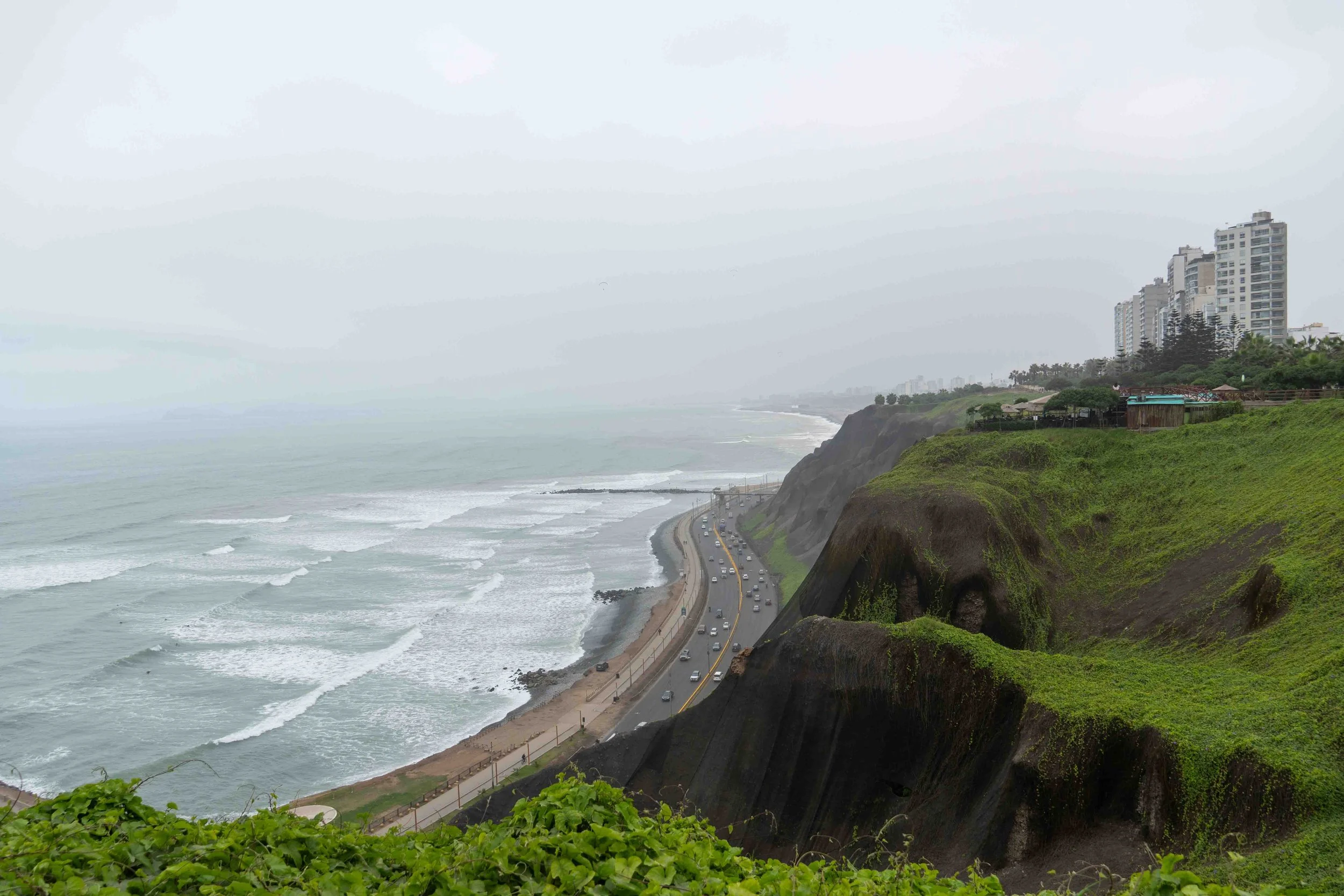
We didn’t have much time to explore the rest of Lima, as our flight morning was at 6am (meaning we had to leave our accomodation before 4am).
Day 2 - 4: The Amazon Rainforest
And so our first activity was flying to Puerto Maldonaldo, where we spent 2 nights at the Amazon. This included one night walk, one morning botanical walk, and a boat ride to an Oxbow lake. Getting to the camp itself from the airport required a half hour - 40min bus ride, and a 2h boat ride along the river during which we saw macaws, capybaras and caymans. As there is limited space on the boat, we were first brought to the tour office to repack items we needed for the few days into smaller duffels, and our main luggages were left in the office itself.

More on the Amazon itself in a separate post, but it felt similar and close to home, and the rainforests that we have in Asia. From fig trees to cicadas, there were many more similarities in flora and fauna, although perhaps I should have expected it given that it is also the same ecosystem of rainforest. This part of the trip would probably be more mindblowing to visitors from places such as Europe where the ecosystems are more different. It did make me think of how it might be worth spending more time exploring e.g. Borneo! In future I would still like to visit the Amazon again, but perhaps a different portion of it such as in Brazil to see the pink dolphins (which unfortunately are being affected by the extreme heat from global warming https://www.straitstimes.com/world/amazon-lake-where-hundreds-of-dolphins-died-was-hotter-than-a-jacuzzi)
Day 4 - 10: Cusco, the Quarry trail and Machu Picchu
Our next flight was from Puerto Maldonado to Cusco. The altitude hit me like a brick the moment we embarked on the orientation walk around Cusco - the town is sloping and hilly, and I started to feel out of breath and lightheaded very quickly. Cusco itself is at an elevation of around 3400m, at sharp increase from Puerto Maldonado at 183m. Our guide took everyone’s oxygen' levels to make sure everyone was adapting fine. We had our hiking briefing that evening, followed by one of the best meals of the trip at Tejas y Piedras restaurant.
We travelled from Cusco to Ollantaytambo the next day, and our hike started at 7am the following day. Again, our items were repacked into a duffel with our main luggages left behind. Packing for this one was a struggle - there is a 5kg weight limit for the duffel which is carried by porters, and the rented sleeping bag and liner already weighed at least 1.5kg. Thankfully they were a little less strict for the Quarry trail as the bags are carried by horses, whereas the limit is followed much more strictly for those doing the Inca trail given that those are carried by human porters.
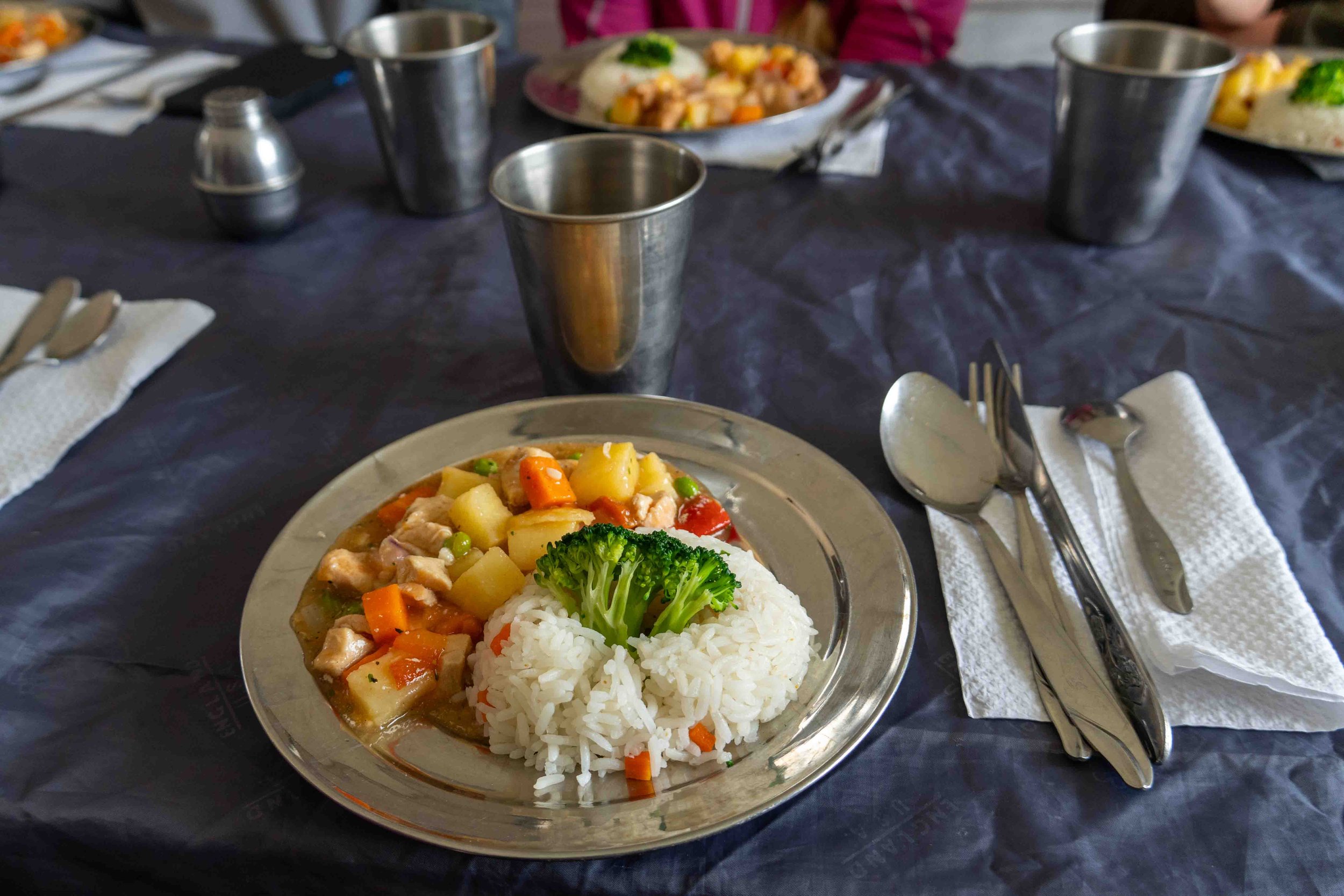
The Quarry Trail was 3D2N. The first day was reasonably manageable, the second day was the longest with both uphills and downhills and the last day was just 7km going almost entirely downhill. The amenities were carried by a team of porters with horses, and they did an impressive job of looking after us. We slept 2 people to a spacious tent. There was a dining tent with a table and full set of cutleries. We were served three course meals consisting of soup, a main and dessert. There was even a toilet tent with a portable toilet bowl! Every day, we were brought a bowl of warm water in the morning and when we finished the day’s hiking to wash up.
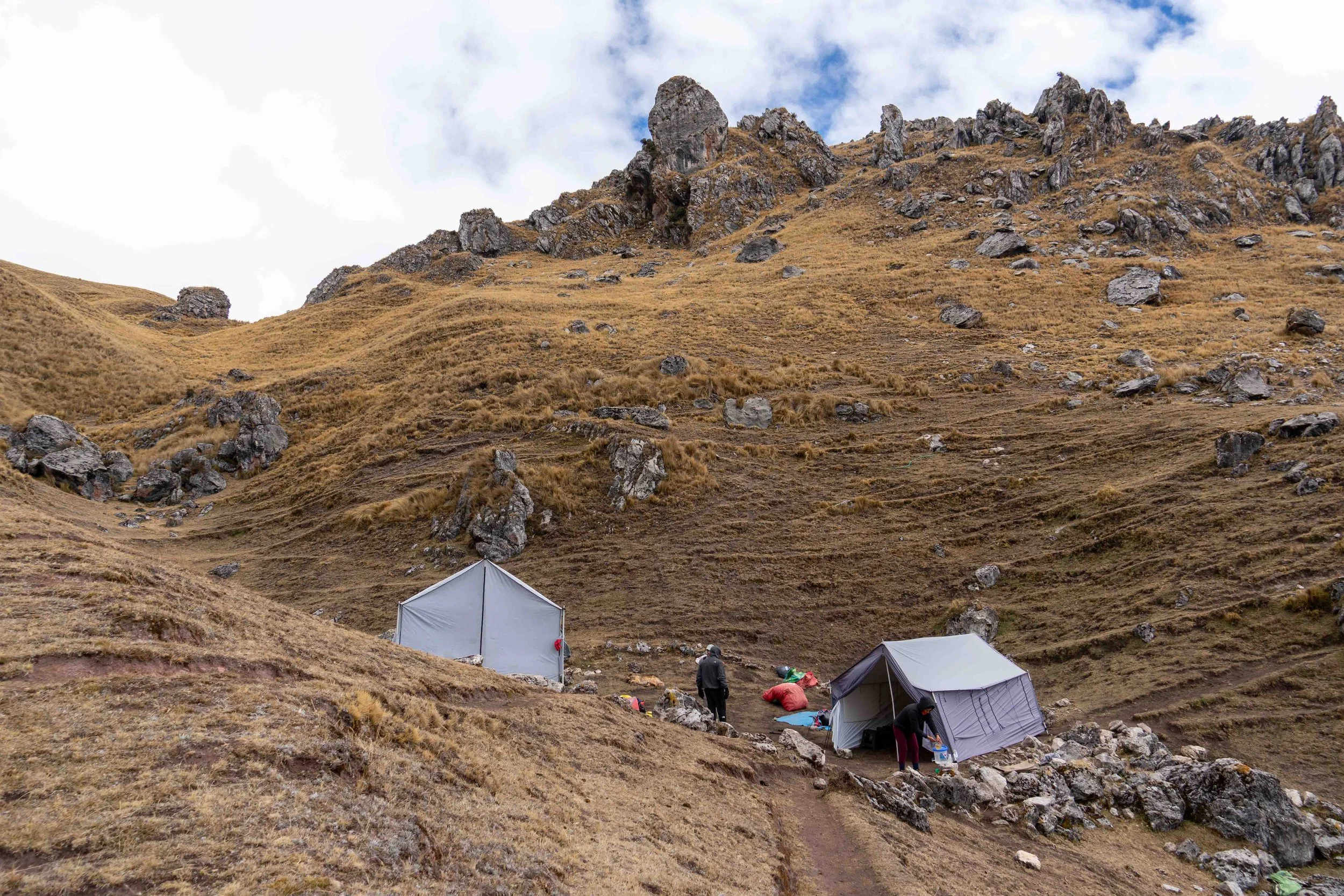
Dining tent set up for lunch
The key highlight of the trail was seeing the quarry where Incas used to source rocks. They did not have huge animals so the rocks would have been moved by humans. In those times, taxes that citizens would pay to the government would be in the form of labour, and people were split into different tasks based on their talents. One of the tasks would have been to break, move and carve the rocks.
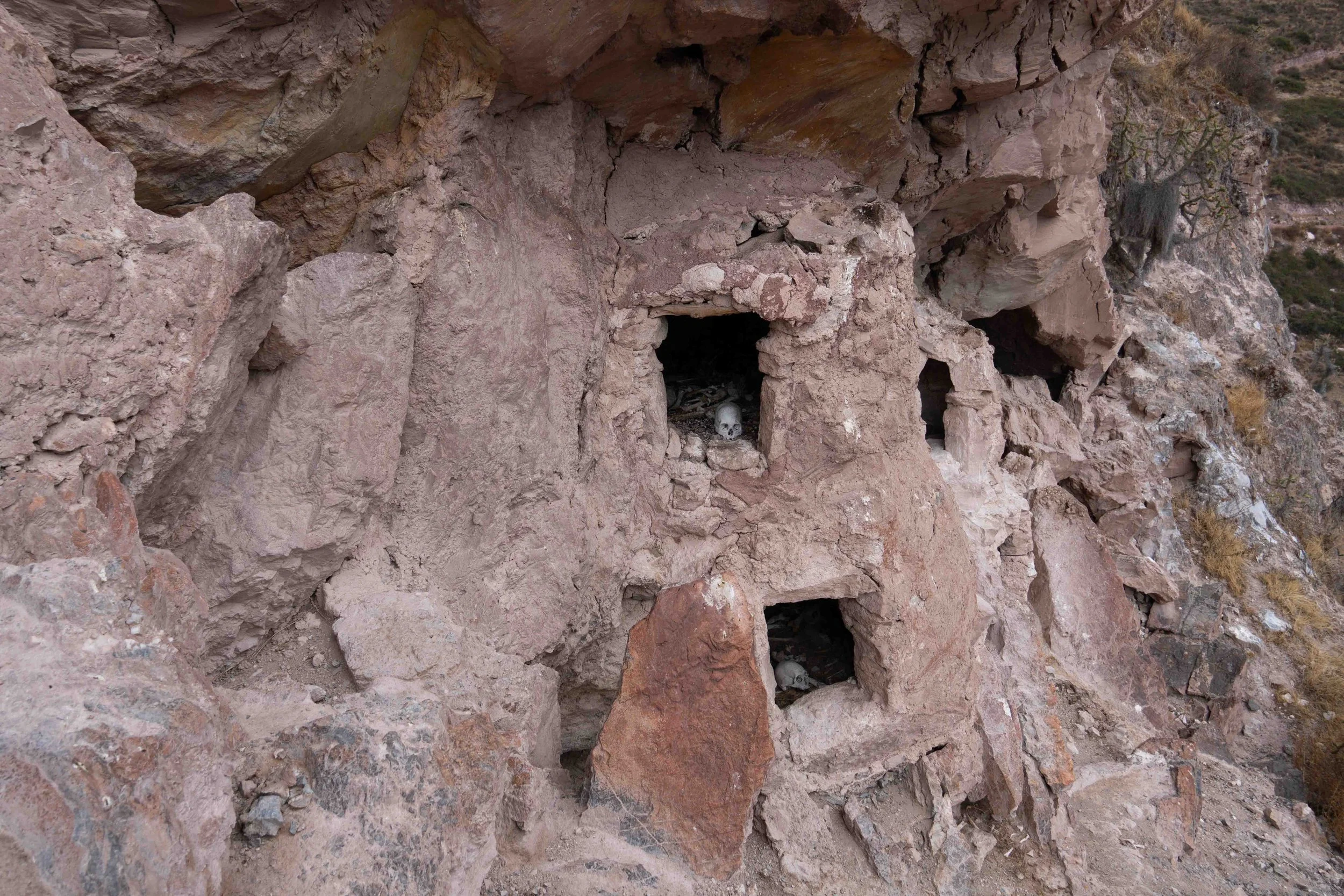
It was also interesting at the start of the trail to see pre Inca cemeteries - as you walk by you can see open tombs with skulls and femurs. The trail only opened post COVID and this area has not yet been excavated by archeologists.
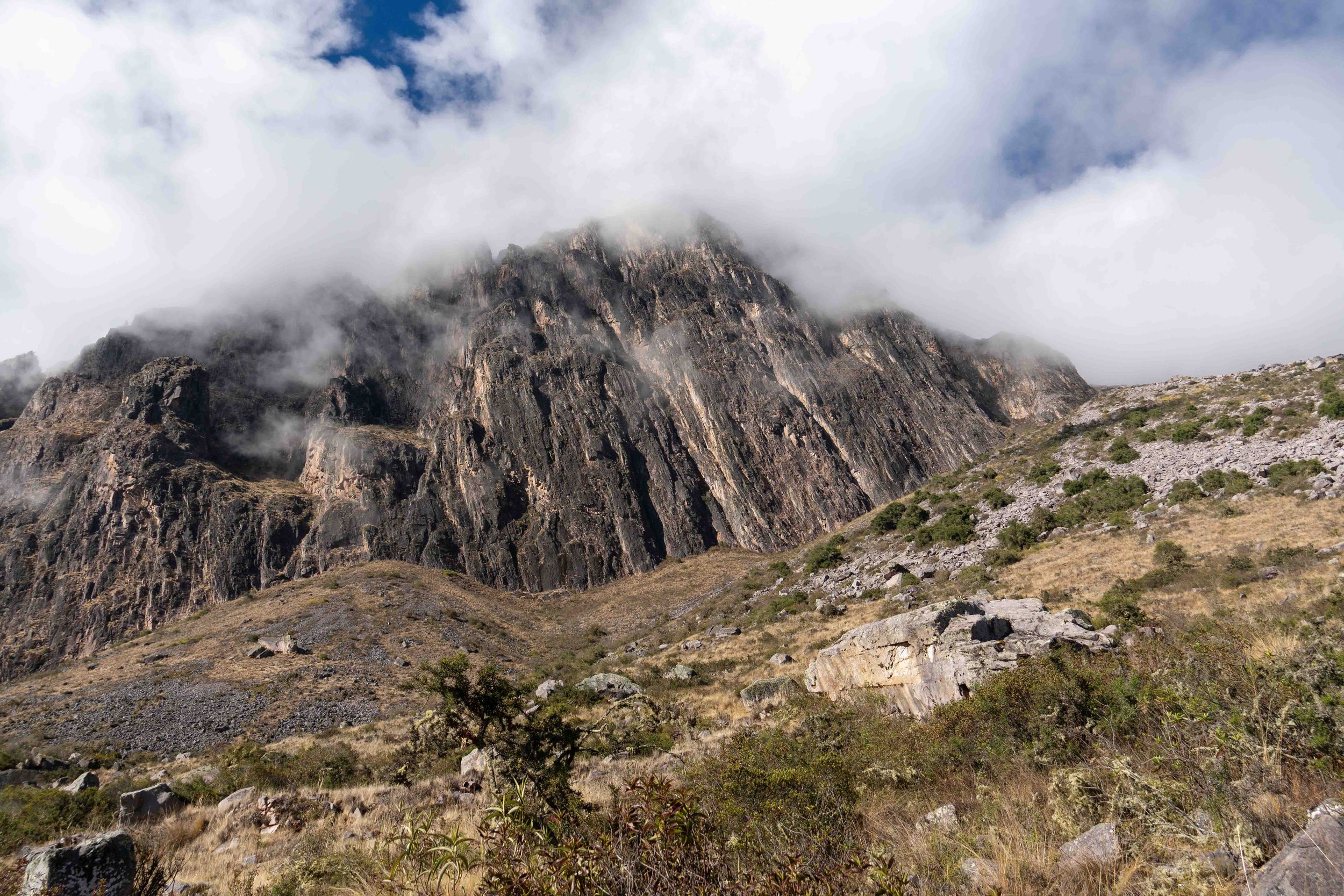
The hike was challenging, but did also bring me up to the highest point I’ve ever been! 4450m at the Kuychicassa pass.
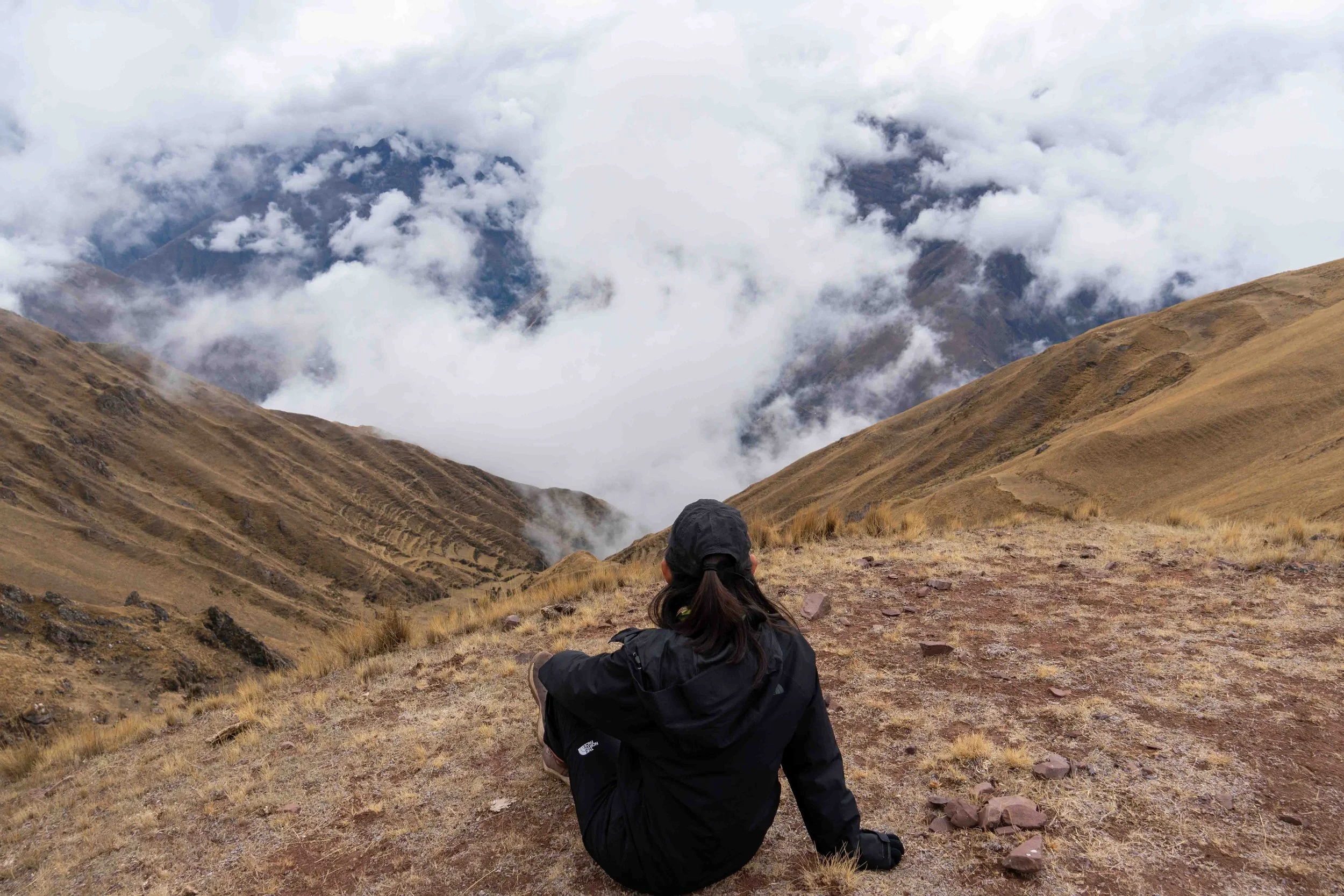
The end of the hike brought us right back to the starting point of Ollantaytambo. While the more famous Inca trail brings you up to Machu Picchu itself, this is meant to be an alternative for those who are not able to get the Inca permits in time, and are open to seeing a different route. The Quarry trail is also easier and shorter than the Inca trail, and the benefit of it is that you get to spend a night in a hotel before visiting Machu Picchu well rested! There are also many other hikes that you can do from Cusco and Ollantaytambo, this is just the one that is offered by Intrepid. For instance, the Salkantay trek also seems quite popular, and G adventures also offers the Lares trek as an alternative.
Coming down from the hike, we headed to the train station for a 1.5h scenic train to Aguas Caliente, the gateway town to Machu Picchu. My roommate and I headed out for a massage there before dinner, while the others adjourned to the thermal baths. I’m not the biggest fan of massages, but after the hike I appreciated the use of HOT hotstones in this one.
Getting to Machu Picchu is indeed an exercise in logistics. From Cusco, it is a 2+h bus to Ollantaytambo, followed by the 1.5h train to Aguas Calientes. If you are going during off peak season, you should be able to get tickets the day before. The suggested route by agencies is Circuit 2, but I wouldn’t obsess too much on the route. Some of my friends who didn’t have Circuit 2 tickets got both Circuit 1 and 3 tickets - Circuit 1 for the iconic photo view and Circuit 3 for a closer walk through. Time of day does matter though, don’t go too early in the morning as it was foggy in the morning and skies only cleared later - although nothing is guaranteed. Our ticket was for 8am - it was still foggy when we first entered but subsequently cleared. I had another friend who got a 6am ticket for a visit in October, but she ended up stuck in fog for 2 hours.
On the morning of your visit, you need to queue to take the bus up to Machu Picchu itself. Make sure you buffer enough time as there is a specific timing allocated for each ticket. I heard the cut off is half an hour after the ticket timing, although I’m not sure how strictly they follow it. We were actually slightly concerned whether the buses would be running, as the day we were visiting Machu Picchu was right when the bus protests were starting (caused by dispute over awarding of bus contracts. We actually visited the day right after the concession of Consettur bus company ended). Thankfully, it was still running that day. The visit would have been much more challenging if we had visited two weeks after when the protests were happening in full force and both buses and trains were disrupted.
An impressive 80% of what you see in Machu Picchu is original, with 10% restored and 10% reconstructed. Machu Picchu had an estimated population of 800 - 1000 people and would have been the biggest city here before going to the Amazon rainforest. Tribes and communities would have come to Machu Picchu to trade and barter crops. In Machu Picchu, you can see farming terraces facing east. The terraces are on different levels and each would have had a different climate (terraces higher up would be colder), allowing different crops to be cultivated.
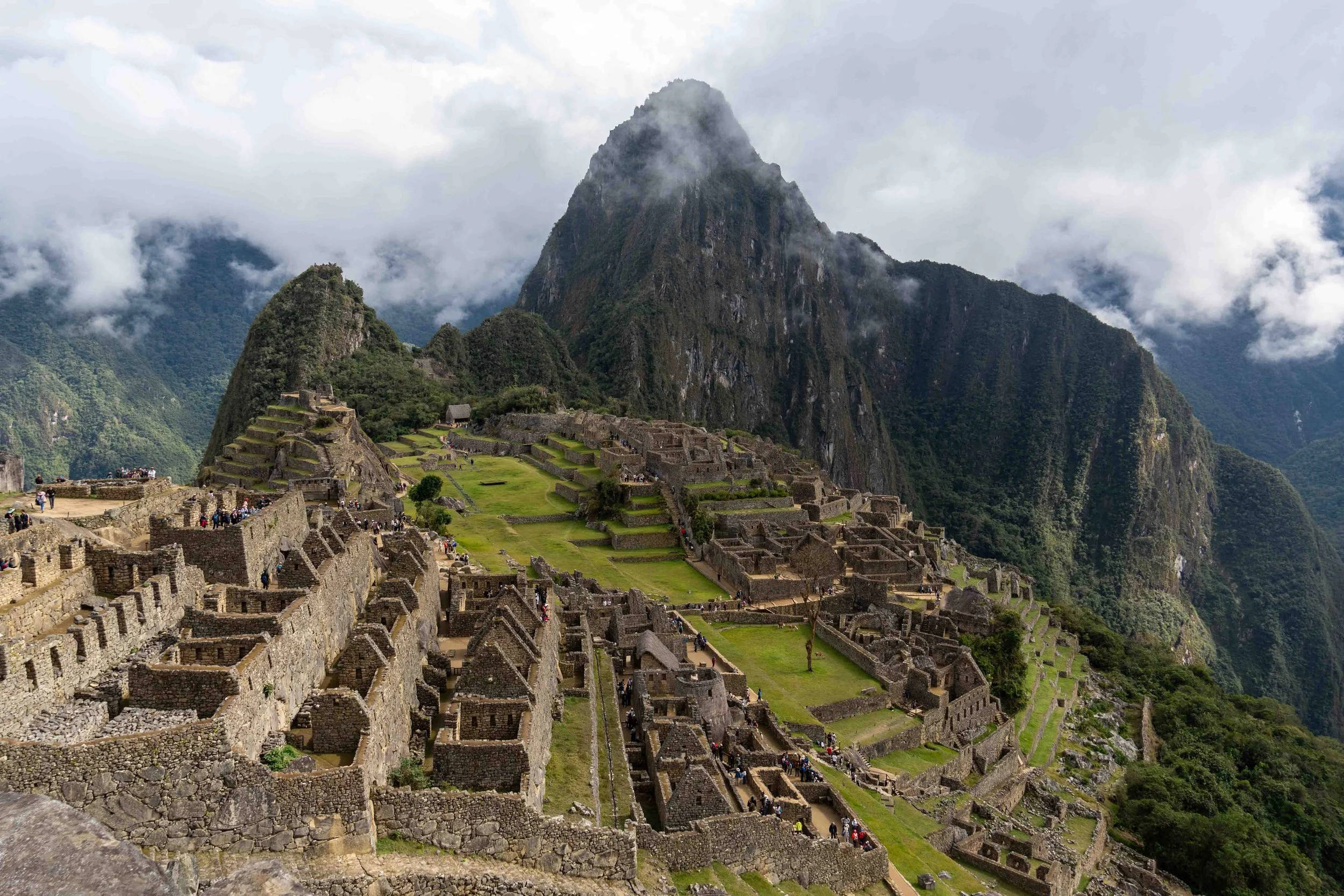
So is visiting Machu Picchu worth it? It is pretty but it does indeed take quite an effort to visit. From Machu Picchu, we headed back to Aguas Caliente > Ollantaytambo > Cusco, for a much needed rest day.
Side Note: The guide sat across the aisle from me on the train back to Ollantaytambo, and chatted with me on Peru’s linkages to Asia. Genetically, research has shown that Peruvians are actually closest to Mongolians. The Chinese first brought some influence into Peru in 1421, which was also the time of the Inca expansion. The Chinese helped introduce rice into Peru (they have a dish called chaofa here which is similar to fried rice) and people from China also came here to help build the railway. In Northern Peru, some people have Chinese last names including Chan or Chang. In the present day, the Chinese have invested in north Peru to build a port for imports into the region. There is now an agreement with Brazil to build a highway linking to that area, to allow for exports from Brazil.
Day 11 - 14: Puno and Lake Titicaca
From Cusco, it was an 8h bus ride to Puno. The bus covered the 8h straight, but it was indeed pretty comfortable and thankfully had a toilet onboard (although the smell did leak to the rest of the bus at points). We were all glad when we finally reached the town of Puno. Along the way, the bus also passed Juliaca, a town 5 times bigger than Puno with a principal activity of gold mining.
Our key reason for visiting Puno was to go to the floating villages at Lake Titicaca. Lake Titicaca is the largest freshwater lake in South America, and can be visited from Peru or Bolivia. The whole concept of the floating villages was pretty mindblowing - People first arrived and lived in the middle of the lake to avoid the Inca conquest. There are more than 120 floating islands on the lake now, with around 5000 inhabitants. The most fascinating part was to learn that the islands were built by the people themselves - by cutting blocks of soil, putting the blocks together and letting it get joined together by the roots of reeds. The floating islands are anchored to the bottom of the lake, the one we visited had 5 anchors. Once the base is formed, layers of reed are added to the island. When we went on a boat ride we eventually realised that the families were there for tourism, and instead of the reed huts they actually stayed in a more developed house on another floating island a short distance away. But yes still, an interesting experience to learn about the history.
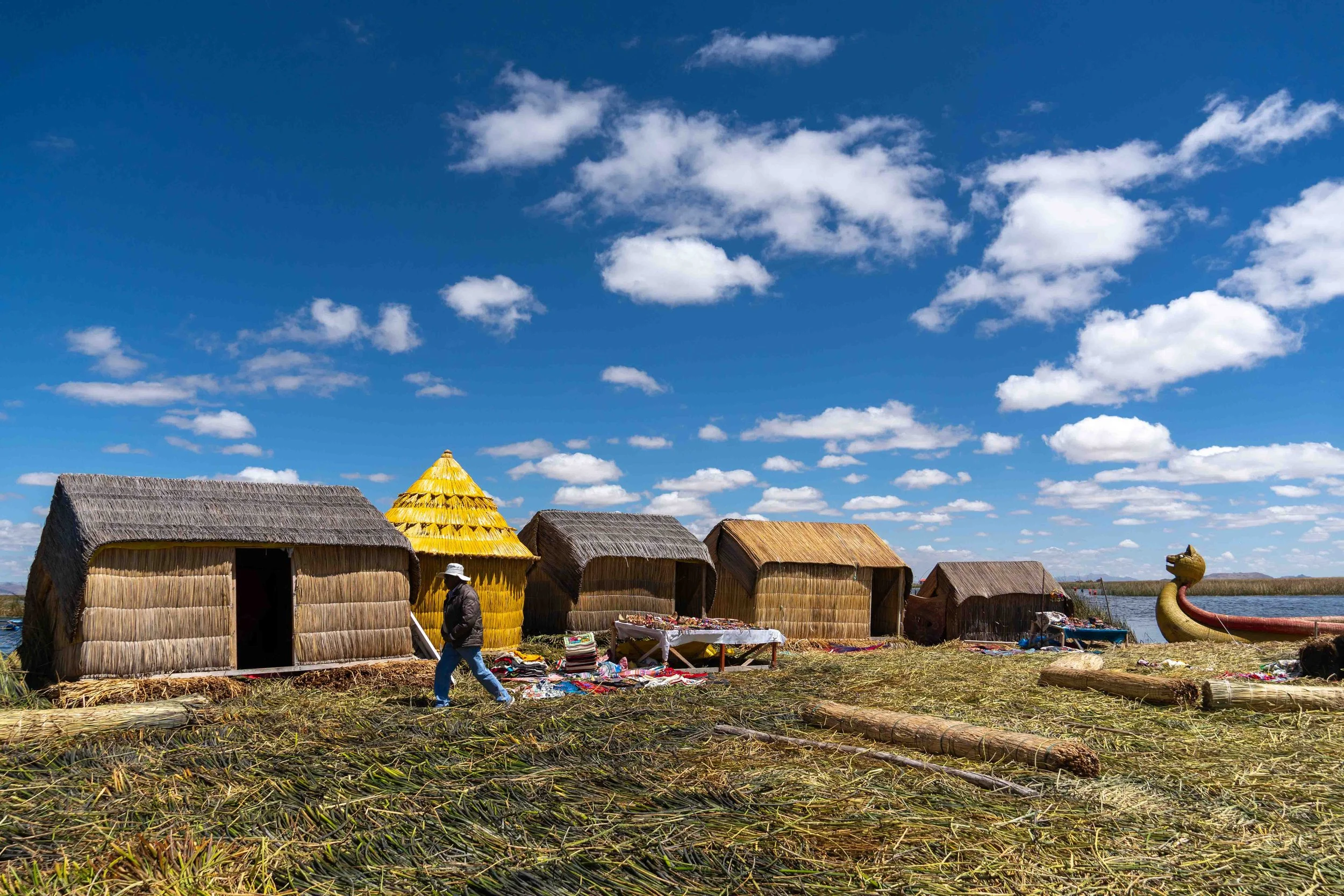
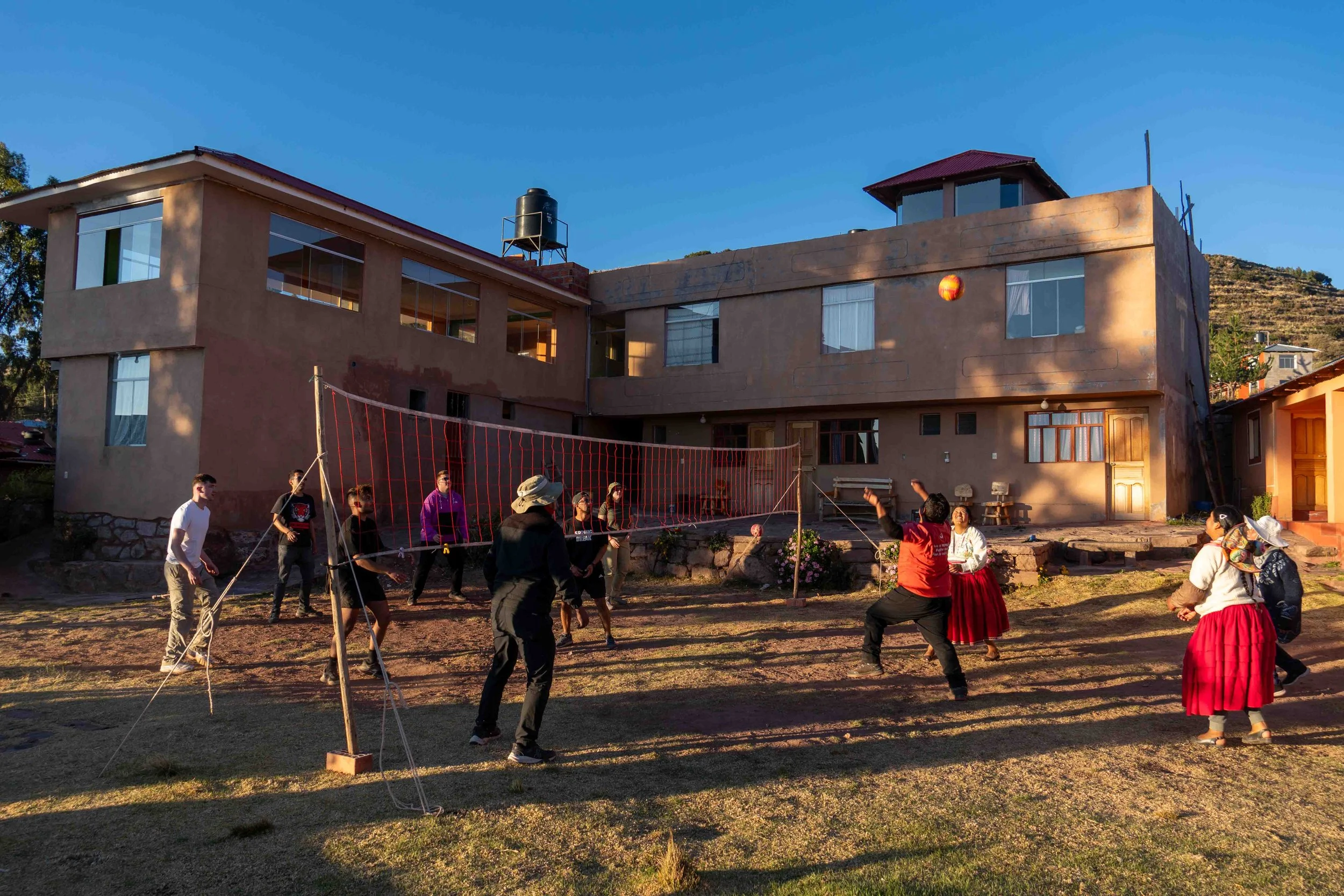
We also did a homestay on Lake Titicaca, where we played a volleyball game with the locals.
Day 14 - 15: Crossing to Bolivia - La Paz
Travelling from Puno to La Paz Bolivia can be done via a short 5h bus ride. However, our travel agency forgot to book our tickets and there weren’t enough slots for the whole group, so we ended up being sent on a different route. (The guide initially told us we were being sent on the longer route due to certain issues with immigration through the original route, but we found out that was false after hearing from the older Intrepid group on the Classics tour, who were indeed taking the shorter route.) We crossed immigration at Kasani instead and had a brief stop at Copacabana in Bolivia before heading from there to La Paz. The trip was meant to take 8h, but with delays from the petrol shortage and with traffic conditions, we travelled for over 12h before reaching our destination.
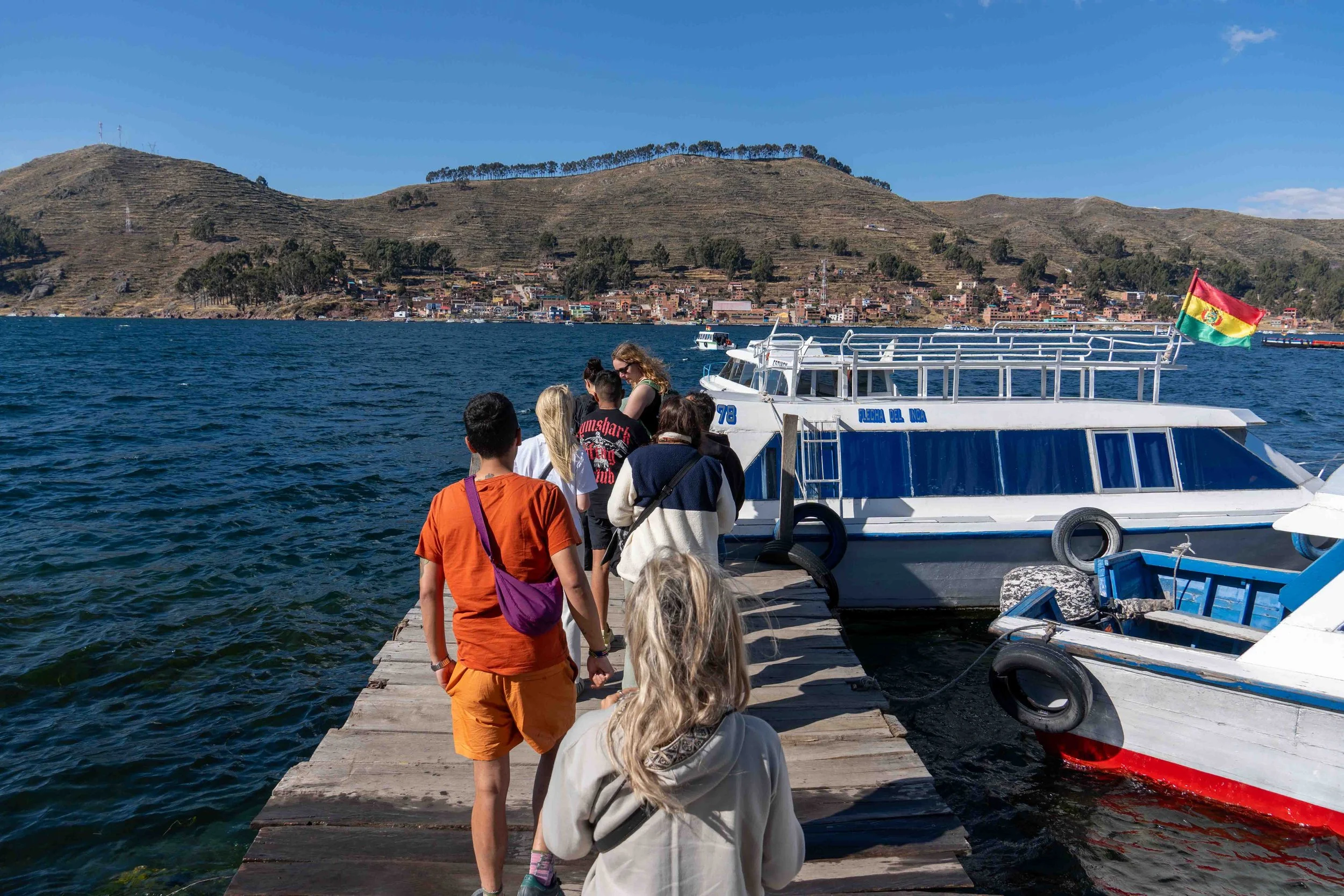
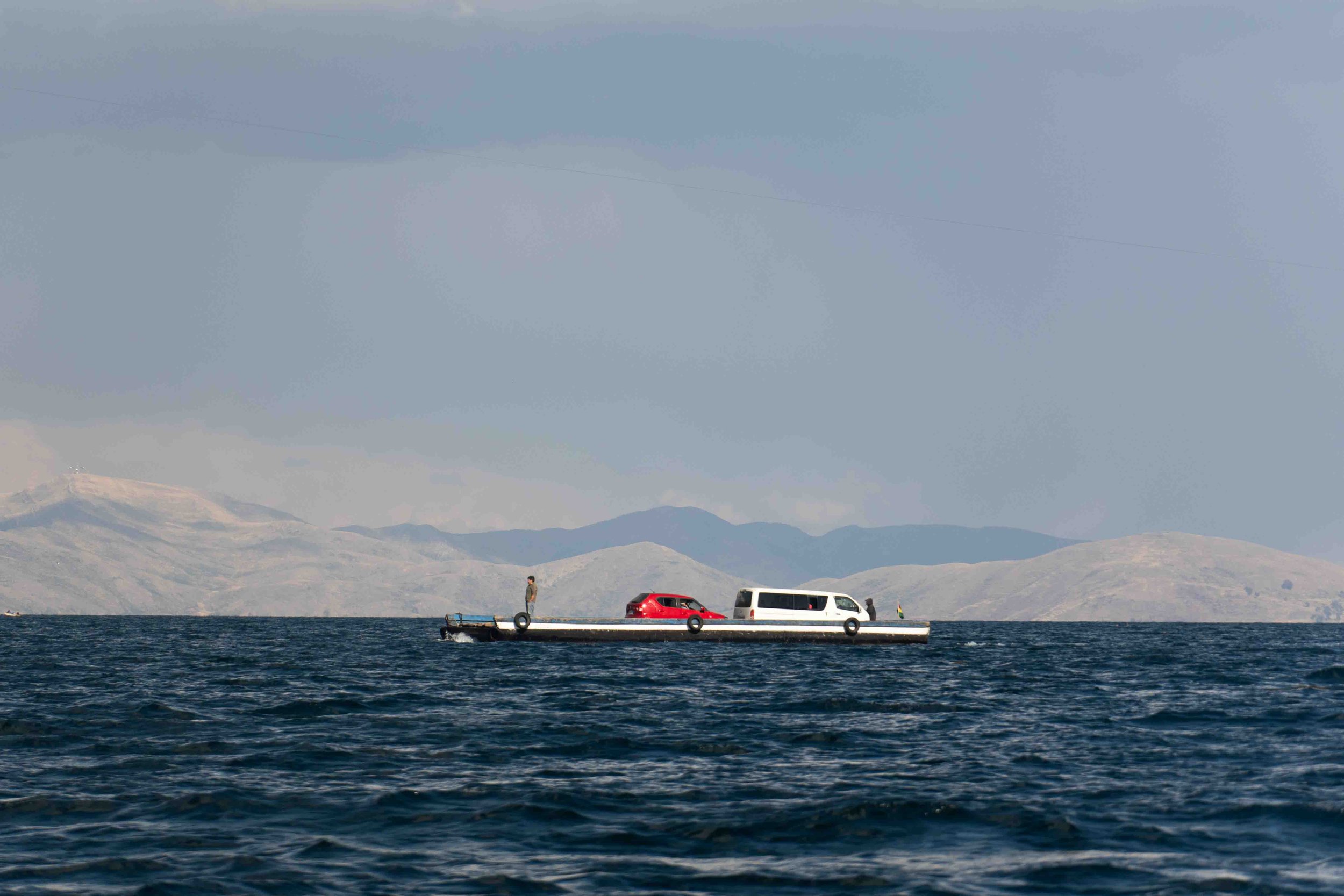
The side benefit was that we were able to see how vehicles pass through the Strait of Tiquina in Bolivia, where there isn’t a bridge. All passengers have to get off the vehicles and are ferried across on small boats. The vehicles themselves are loaded onto a type of barge and brought across.
Driving into La Paz at night also felt beautful and magical, with the golden hour sunset across El Alto, and the twinkling lights of the city as we finally pulled into La Paz.

And with that, as the last day was essentially a free day, that marked the end of the Real Peru and Bolivia tour with Intrepid. Some of us said our goodbyes, with many heading off on Uyuni salt flat tours right after.
Thoughts on Intrepid tour
When looking at tours in Peru, I looked at tours across G adventures and Intrepid, essentially selecting Intrepid because they had tours that combined Amazon + Machu Picchu, whereas G adventures did not have a joint one.
When I went on my first G adventures tour in Africa, I was impressed. It felt like everything was taken care of. The guides informed us about the plan and logistics, where to draw money, how to stay safe, they shared with us on the culture and history of the countries and the regions. In G adventures Africa, there was a guide and a driver to 18 of us, but they both essentially acted as guides. I learnt a lot about the places we visited through the guides.
Not exactly a direct comparison due to different regions and different activities, but I feel like previous tours set a standard that I was looking for on this trip. For this case with our Intrepid tour, there was only one guide to 16 people, with different services provided by others along the way - e.g. chartered bus services, or there were specific guides who joined in for Amazon or Lake Titicaca (they were all fantastic). Our main guide however seemed more focused on getting us from point A to B, but did not provide much guidance beyond that. Even when asking for guidance with regards to money e.g. where to withdraw, how much we needed, he also did not provide much help. Other than the arrangements of getting from place to place, it felt like we were self guided. Our Quarry trail was also led by Intrepid guides. Although the 2 guides were good, 1 guide turned back early after the first day with 2 people who wanted to leave. Having only 1 guide for the remaining 7 people did not feel sufficient on Day 2, which was the most challenging. After our trip, we did speak with a couple who did the Lares trek with G adventures in Peru - they also reflected that the experience was not as good as G adventure trips they had undertaken in other countries. We hypothesised that this was because for both G and Intrepid - they would have been running tours in Peru for a long time, it would have been one of the first places in LATAM it was set up, so perhaps processes and tours have not been updated. The Intrepid tour guide who took over for the Bolivia leg also seemed pretty on the ball and fantastic, so maybe it is also a luck and change thing.
If I were to redo the trip in future, I think I would self plan more of it. The orientation walks in the Intrepid itinerary were really just for orientation, aka which direction to walk, so in most cases I ended up doing separate free tip-based walking tours on my free days anyway. I do think it still makes sense to go with a group for the Machu Picchu portion given the logistics involved however, and one would also still need to do a tour for any hikes, so perhaps it makes sense to do a Cusco - Cusco tour for those.
And if you are looking to book any Intrepid tour - make sure to ask for the price of the trip in the different currencies! USD, Euro, Australian dollar. The price does differ based on the currency, and it can be quite a big difference. When I booked my trip, there was a sale still ongoing if I booked in Australian dollars, but the sale had somehow ended for the other currencies, so I managed to save quite a significant amount by paying in AUD.