JOURNALS: Stories at high altitude in La Paz, Bolivia
Bolivia took some adjusting to, particularly with its high altitude and with the shift out of group to solo travel mode. My travel here was a bit more aimless as I created my plans on the go - perhaps because of that I feel like I dove a little bit deeper here, and gradually came to appreciate learning about its culture and history. Each part of Bolivia that I visited - La Paz, Sucre and Santa Cruz - was very different from the others.
A couple of things to know about Bolivia before your travels:
First, the blue dollar rate: Bolivia has a blue dollar rate for USD. What this means is that the government has kept an artificially low official exchange rate with USD (currently around 1 USD = 6.96 BOB). The purpose of this is to help control inflation. So if you withdraw money from an ATM in Bolivia, this is the rate that will be used. However, due to the USD shortage and the need for USD in the market, you can get a much better rate by changing USD at almost all money changers and even some hotels or stores along the street. When I was there in September, the exchange rate ranged from at least 1 USD = 10 BOB, to as high as 12.8 BOB. Higher rates were given if you had large 50 and 100 USD notes. So TLDR: bring in USD with you and exchange it there, instead of using the ATMs. If you are coming from Peru, you can withdraw USD from the ATMs there to bring into Bolivia.
(P.S. When booking accommodation online, do note that some businesses try to make you pay in USD and refuse to take BOB, so it might be good to check in advance what currency they expect payment in. I had a good experience with one B&B who was upfront about it in all their communications online, they explained why and clearly stated the exchange rate at which they accepted BOB. However, I did have a negative experience with another airport accomodation which tried to work around this by taking a charge out of my credit card in USD without prior approval, and simply cancelled on me when I requested to pay in BOB (I still have not receieved that refund..). But it wasn’t a prevalent issue though, the places I stayed in Sucre asked for payment in BOB with no issue.)
Second, Bolivia is facing a gasoline shortage. This is linked to the USD shortage, which means the country struggles to import fuel. This shortage is driven by the lower value of Bolivia’s natural gas exports, compared to its gasoline and diesel imports. For tourists, budget extra time as bus journeys may be delayed if companies are unable to get fuel. On our bus journey from Copacabana to La Paz, our bus was delayed for slightly over an hour as we waited for fuel to be delivered to us. As our guide said, just a part of what the locals face in Bolivia. Beyond transport, their livelihoods are affected if they are unable to procure enough gasoline for equipment e.g. tractors for farming.
And one more additional point: This is not something I faced during the trip but it was mentioned by our guide. If you are visiting Bolivia around any politically sensitive periods such as elections, note that roadblocks and strikes occur in Bolivia. This can be problematic for bus travel if routes are blocked, so prepare for delays or find alternative means of travel such as flights. For instance, some of the tour groups who travelled to Bolivia in August (when general elections were taking place) had to take flights instead of buses for this very reason.
Why La Paz looks the way it looks
La Paz is at a high altitude of 3650m. The city sits in a canyon in the Bolivian altiplano and stretches to the adjacent El Alto city in the highlands at 4150m - meaning that there is an impressive 500m difference in elevation within the city itself. In La Paz, wealthier portions of the city are found at the lower elevations, which can be seen from the cluster of high rise buildings in the center.
There are several articles online that claim La Paz is the highest capital city in the world. However, this is slightly inaccurate, as Sucre is technically the capital city of Bolivia. Sucre is the historical capital of Bolivia, whereas La Paz is the administrative capital.
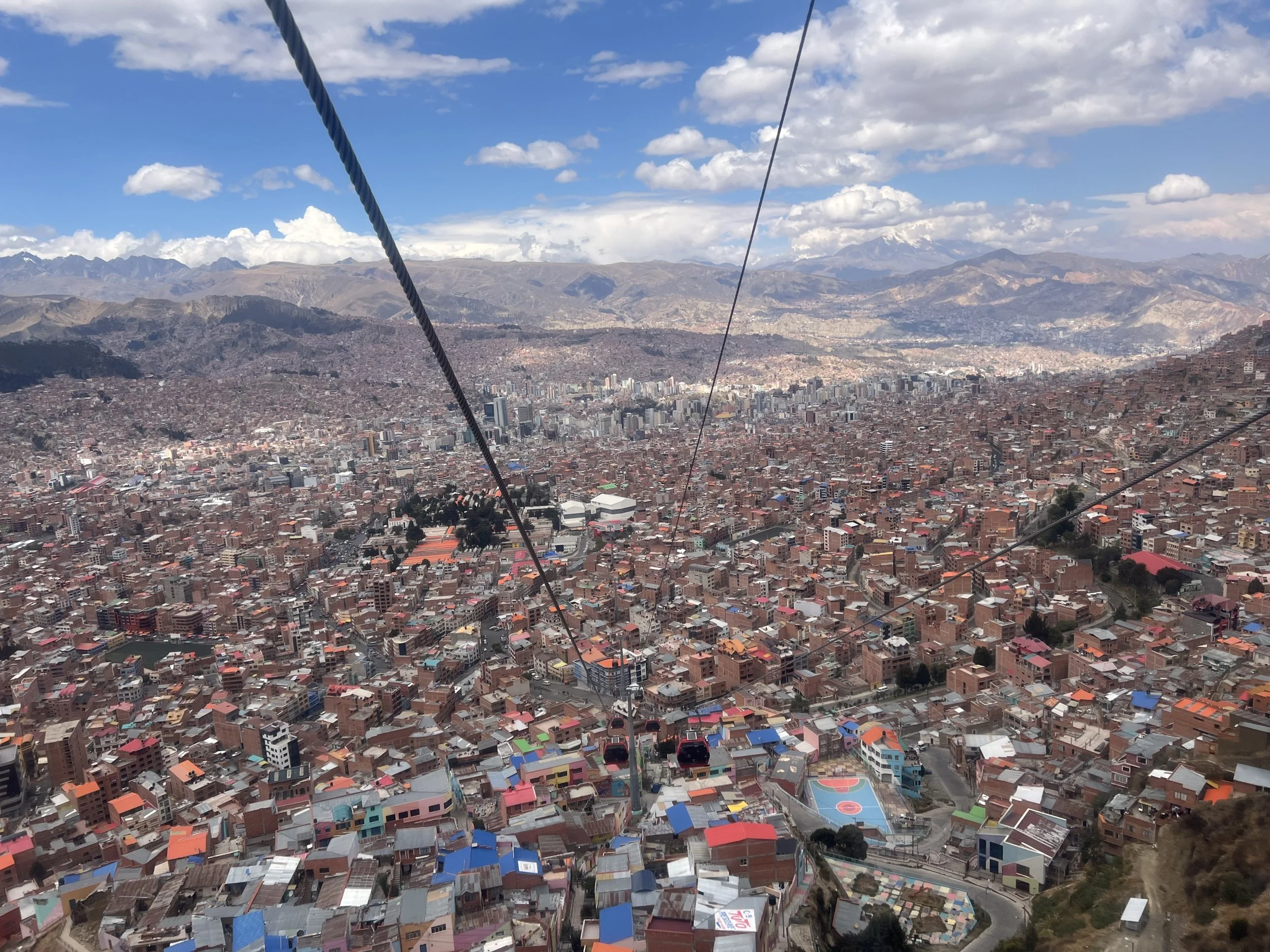
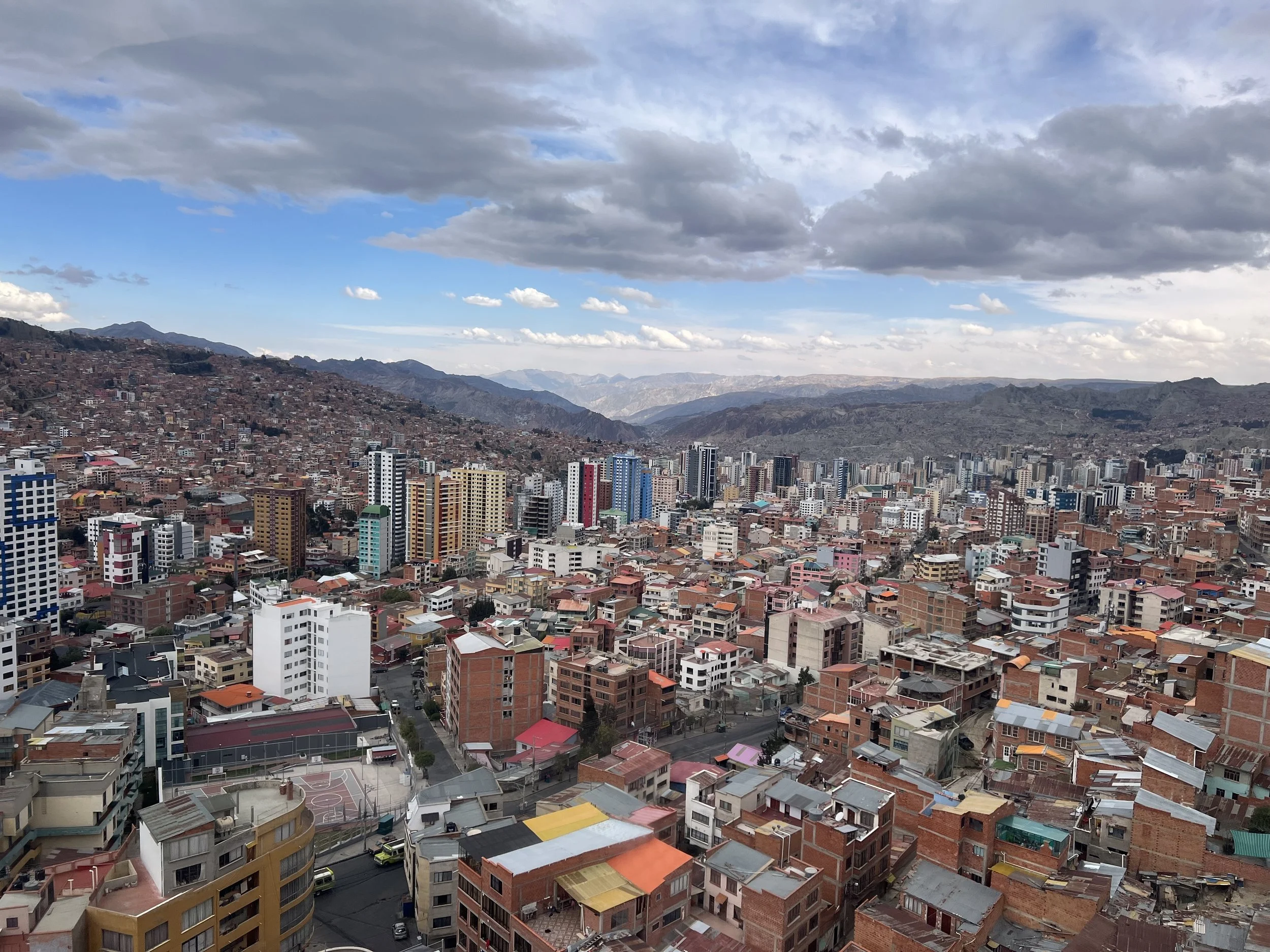
Looking at the houses and buildings around, you’ll notice that most of them are made of bricks with no outer facade or painting. Some houses also look incomplete, as if another floor or extension is meant to be added on to the house. The houses are actually left this way intentionally. Homeowners do not need to pay taxes for unfinished houses or those still under construction. This applies to houses built of brick with no completed outer facade, hence most people leave their houses as is.
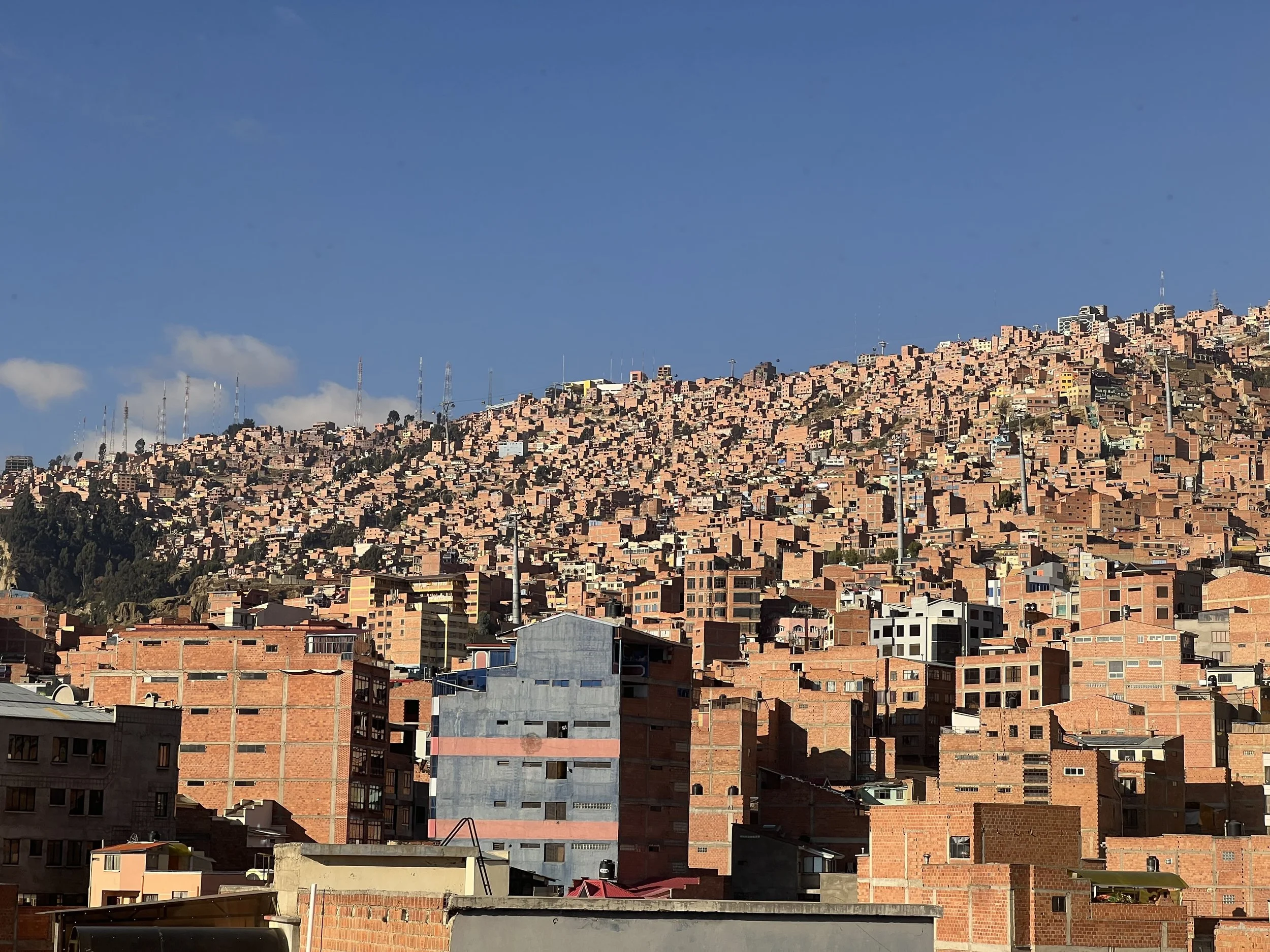
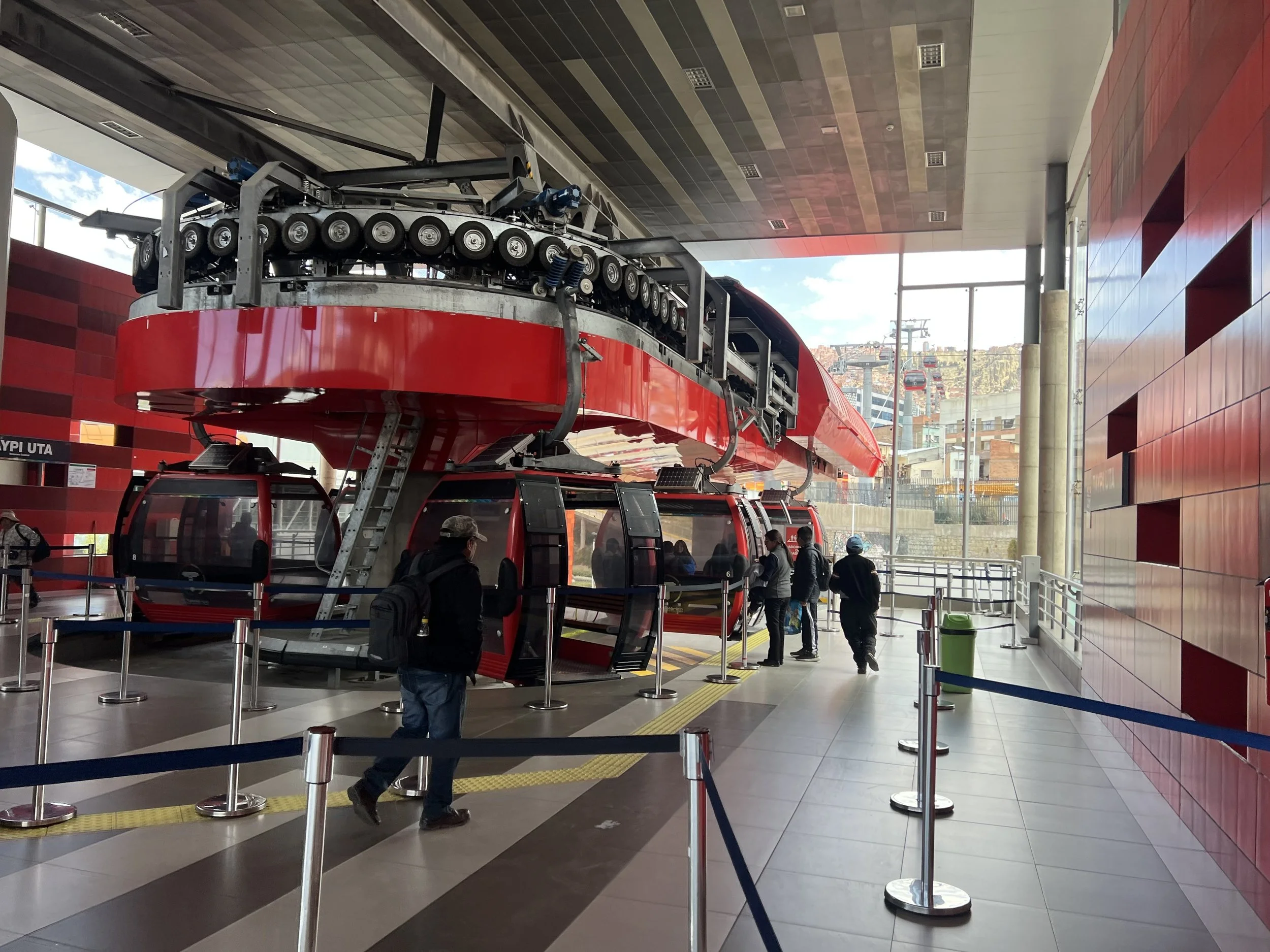
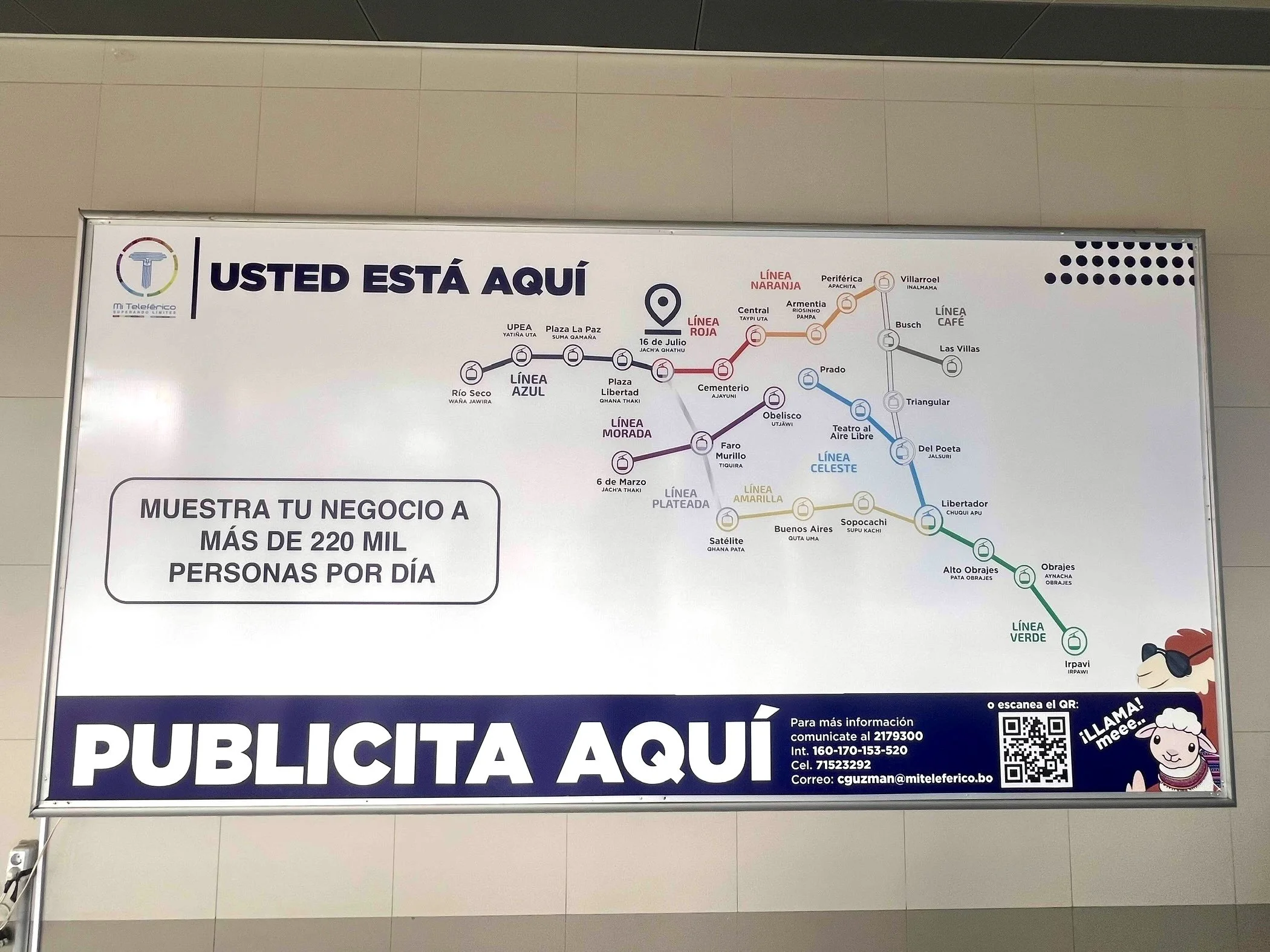
To get a clearer view of all this, riding the cable car system (known as mi teleferico), is a must while in La Paz. The cable car system in La Paz is fairly new and very modern, with the first line (the red line) starting operations in 2014. It is modelled after the cable cars in Medellin, Colombia.
We took a cable car loop around the city, starting from the Central Station. By changing at the different lines, you can take a full loop around and get back to where you started (red line > silver line > yellow line > blue line > white line > orange line), all for only 11 BOB. The elevation difference around the city is huge, and the cable car loops also takes you above parts of El Alto.
The airport that serves La Paz is actually located in El Alto. Just adjacent to La Paz, El Alto is the second largest city in Bolivia after Santa Cruz, and it is also the youngest city. El Alto was only officially incorporated as a city in 1987, and is today one of the fastest growing cities in South America as people move from rural areas to be near La Paz for economic opportunity. From an initial population of approximately 100,000 in 1970s, the population in El Alto has grown to be even bigger than that in La Paz. Majority of the population works in informal commercial activity - El Alto has one of the largest markets in South America spanning 5 kilometers.
The 16 de Julio station takes you to El Alto (do note that it is suggested to exercise caution when visiting and not to go there on your own after dark).
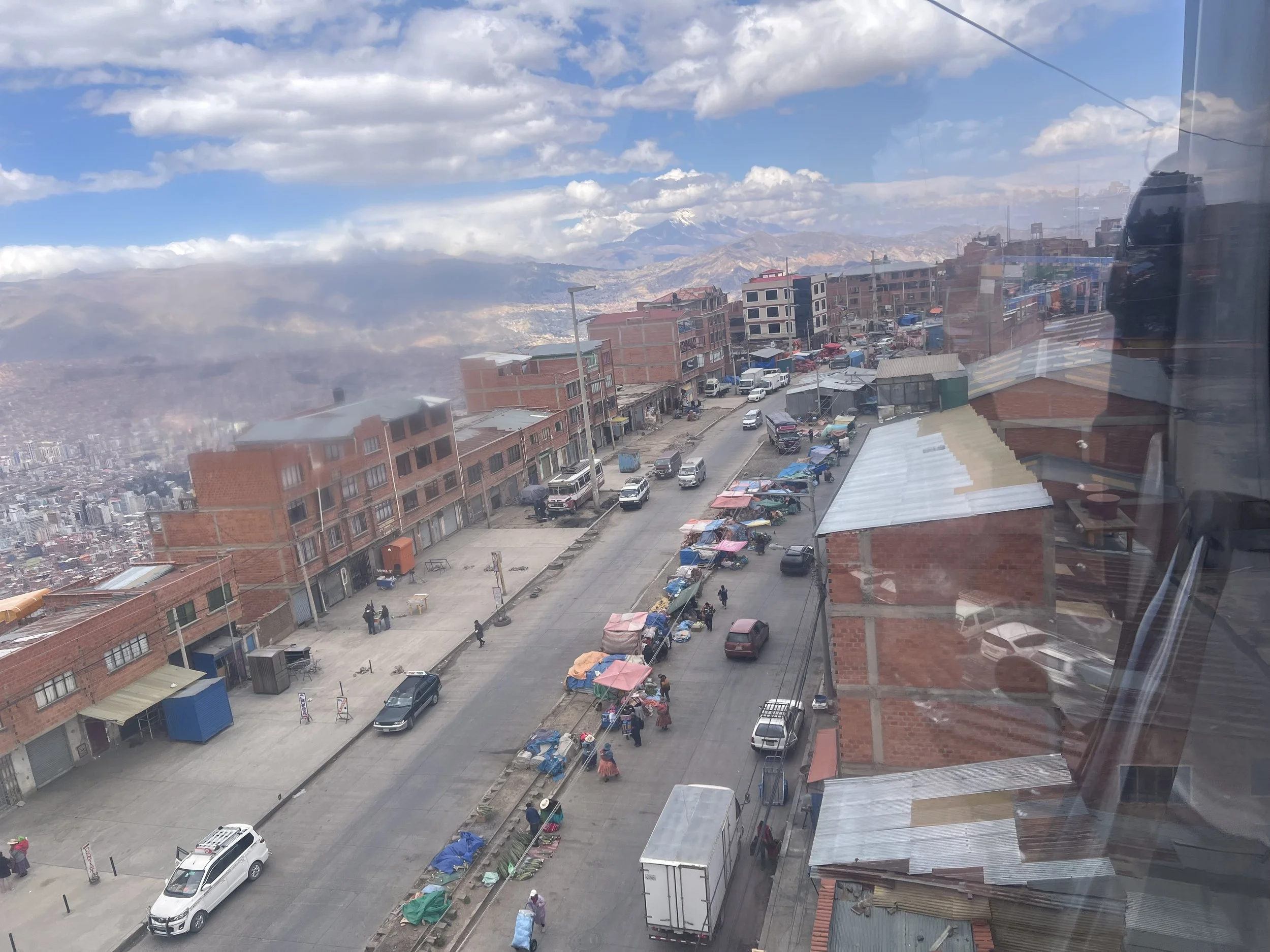
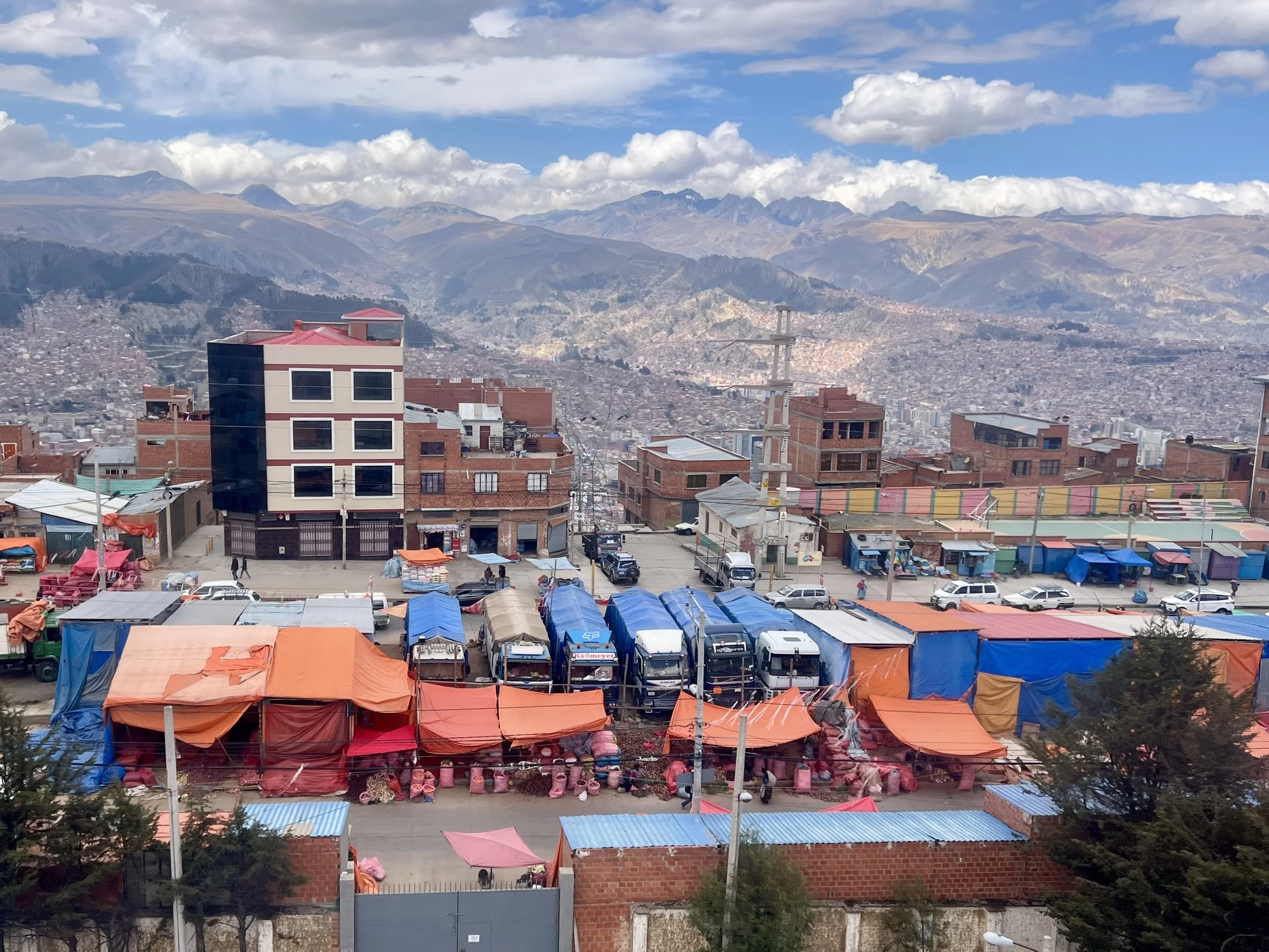
Views of the market in El Alto from the cable car, with the massive trucks used to transport produce.
Fun fact: FIFA previously banned matches from being held in Bolivia due to the high altitude. This ban was lifted last year, which means that matches will be played in the El Alto Municipial Stadium at 4000m high. https://www.nytimes.com/athletic/5746338/2024/10/11/bolivia-altitude-el-alto-colombia/
Buying items from caseras
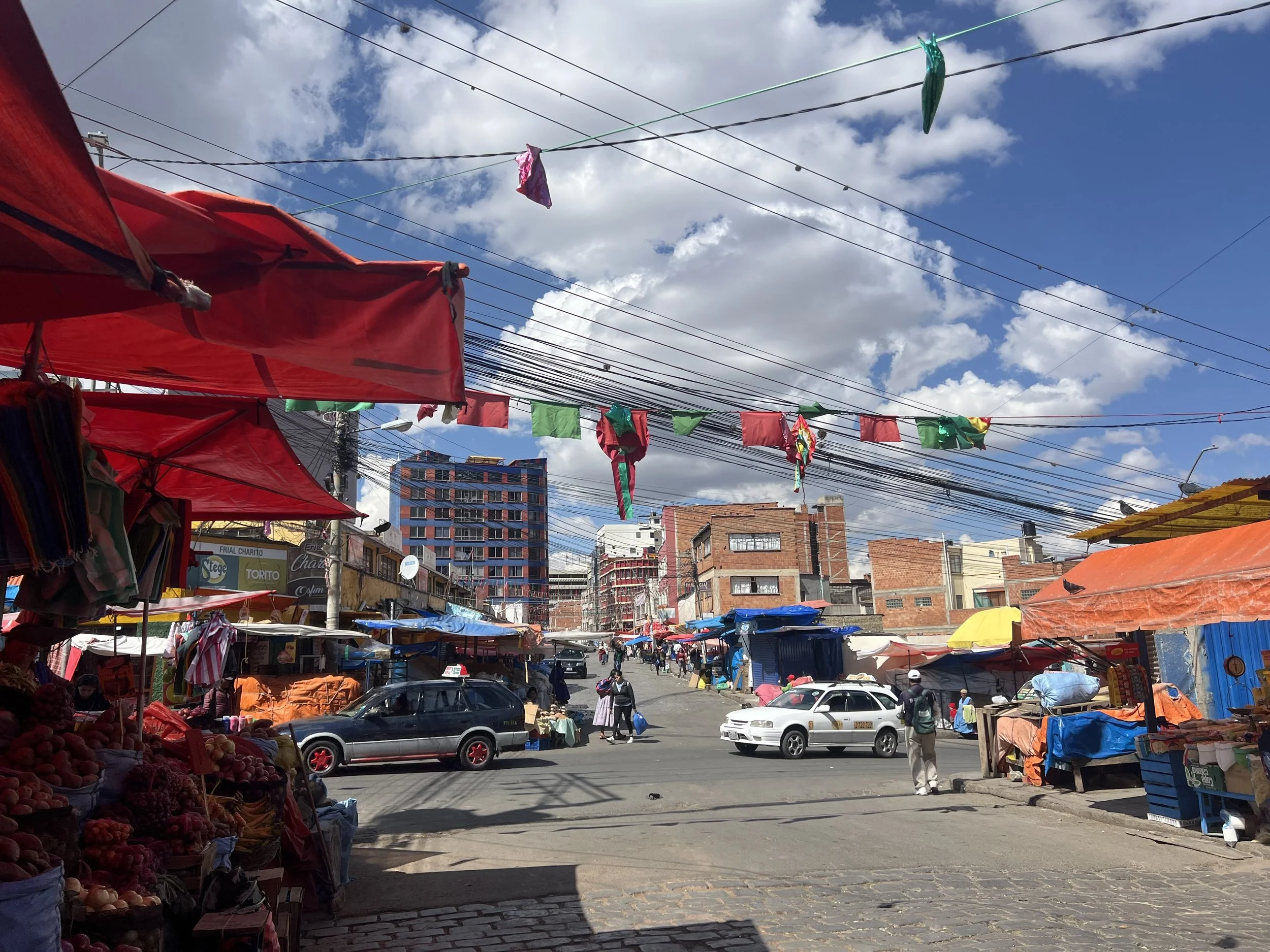
On my first day in La Paz, I stepped outside in the bright sunlight to bustling streets lined with informal stallholders. The initial sense of overwhelm I felt thankfully dissipated after a walking tour in the afternoon (I went with the one by Red Cap, it was great!). As my guide explained, the ladies that lined the street are known as caseras. Most of them were wearing their traditional attire, and they brought in produce grown in the valleys of La Paz or Cochabamba. There are small unions of sellers that bring the caseras together, and they pay a fee to the municipality to set up their stalls. Given the prevalence of markets around La Paz, there are no supermarkets.
Another morning when I woke up at 5am, I heard some noise outside and looked out the window to see vehicles already pulling up to drop the ladies and their items.

It was indeed interesting to learn about the caseras. In Bolivia, everyone has their own casera, or favourite seller, for different items. Being loyal to a casera brings benefits - discounts, the select choices of produce, or a heads up in advance during times of low production. The ladies are of the Aymara culture, dressed in long skirts and long sleeves. Besides simply selling products, they support the social network, asking about their customers and taking interest in their lives. This reminds me slightly of our markets and hawker centers in the heartlands of Singapore, or what life must have been more like in the past for my parents and grandparents. My grandma, a regular at a fish stall in Whampao, often purchases fish at a price that no one else in the family has been able to match. My parents, who always frequent the same hawker stalls in Chinatown market, are greeted heartily by one of the stall owners with a “大客来了(translation: big customer is here)”.
Religious beliefs and Pachamama (Mother Earth)
This part was a bit complicated, but sharing bits and pieces here of what I heard from the guides.
A key attraction in La Paz is the Witches Market - it is small and now more of a souvenir market, but still interesting to observe. Given the Spanish conquest, Catholicism is prominent in Bolivia. 56% of people in La Paz claim to be catholic. But at the same time, many still worship Pachamama, which means Mother Earth. Our guide shared that 70% of people in La Paz do rituals for Pachamama. The witches market is where you can purchase the items needed for these rituals.
There are 2 important rituals which she shared. The first, koa?? (what it sounded like but idk how to spell), is carried out when one needs to ask things of Pachamama. You would need to find a shamen (known as yatiri in their culture). The yatiri would help burn the offerings, the smoke is delivered to Pachamama who can then tell what you need. The second is a ritual to give thanks, chalia??, or a ritual of joy. The same offerings are used, but instead of being burnt, they are put in the item you asked for, and Pachamama will then provide you with protection.
The first thing I spotted at the Witches Market were the llama fetuses hung above the shops - used as sacrifices to Pachamama. Llama babies are used for things that are big and important, such as construction. They believe that a sacrifice is needed when building a house as the land belongs to Pachamama. The size of the llama needed depends on the size of the house. The biggest baby llama may be used for a 5 - 6 story house. A small fetus may cost 50 BOB, while a large baby llama could cost 500 BOB. We were told that the llama babies are sacred, they are not killed but the fetuses collected are a result of natural abortions or deaths. For the animals to be used as sacrifices, they need to die naturally. Given further probing given the number of fetuses, it may also be that it is a result of abortion due to herbs given by the yatiris to farmers.
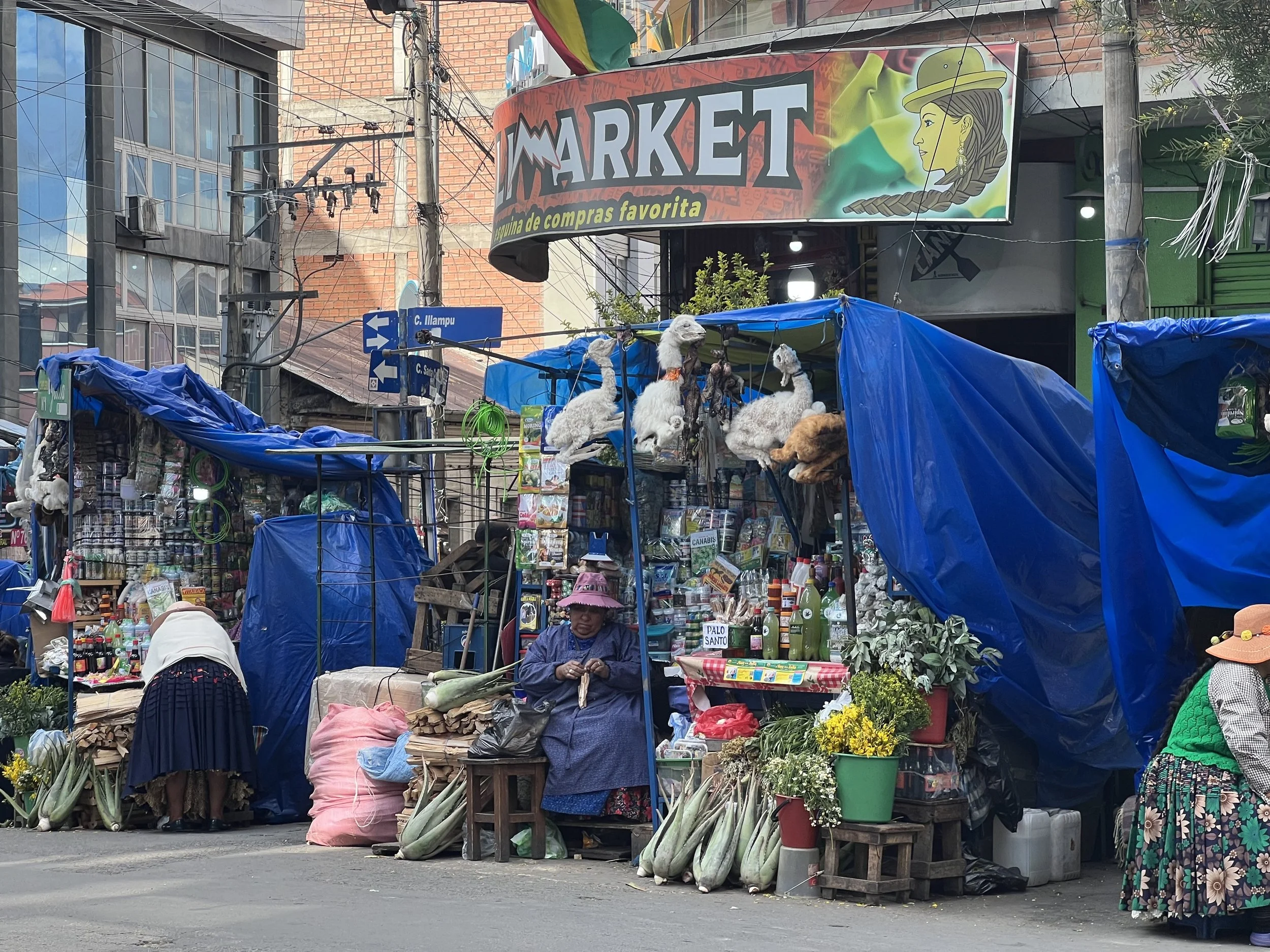
During my extra day in La Paz, I decided to take an extended tour to see the larger Witches Market in El Alto. My guide reflected that some shopholders moved from the Witches Market in La Paz to El Alto, in order to serve the locals rather than be an attraction for tourists.
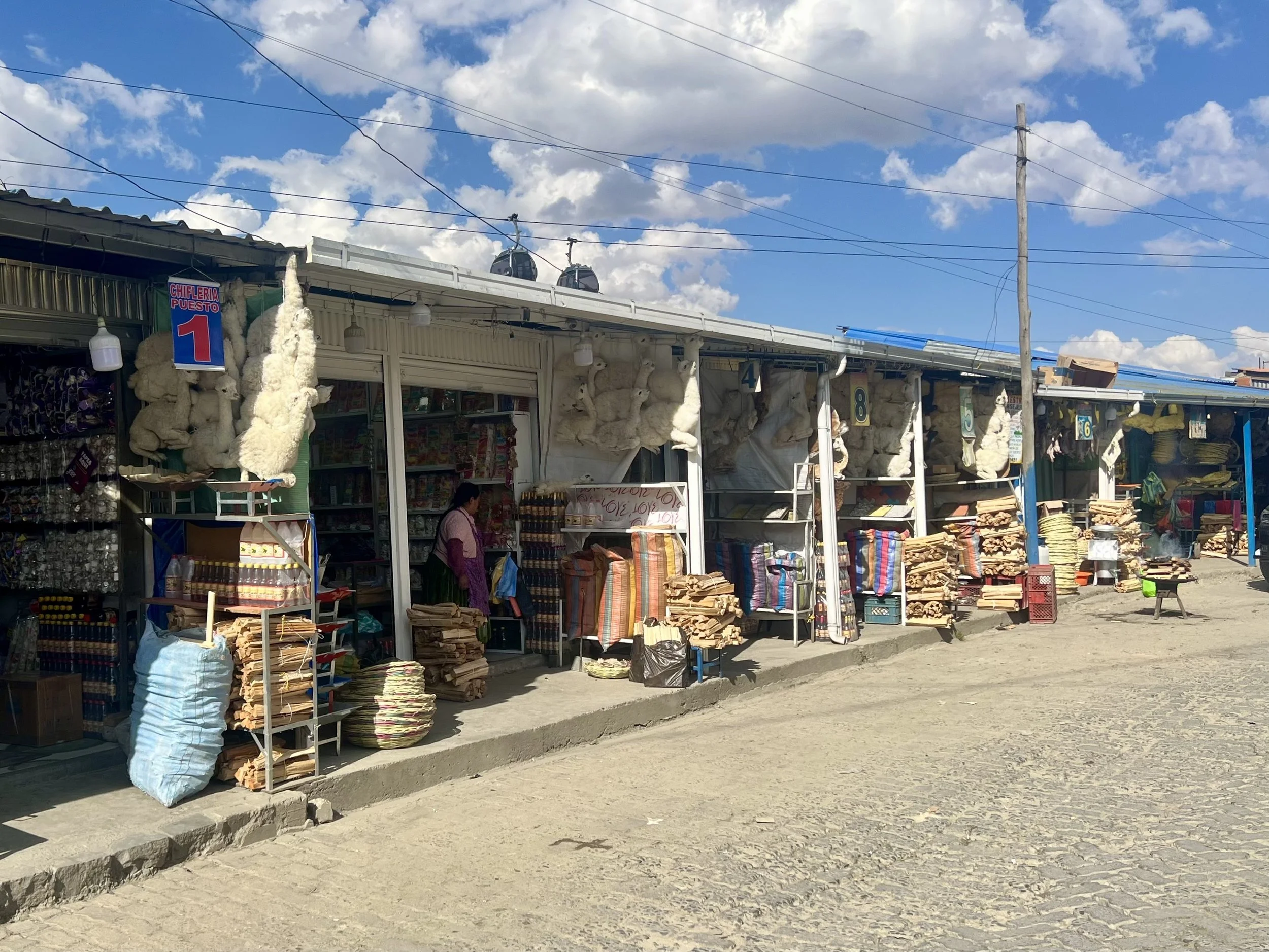
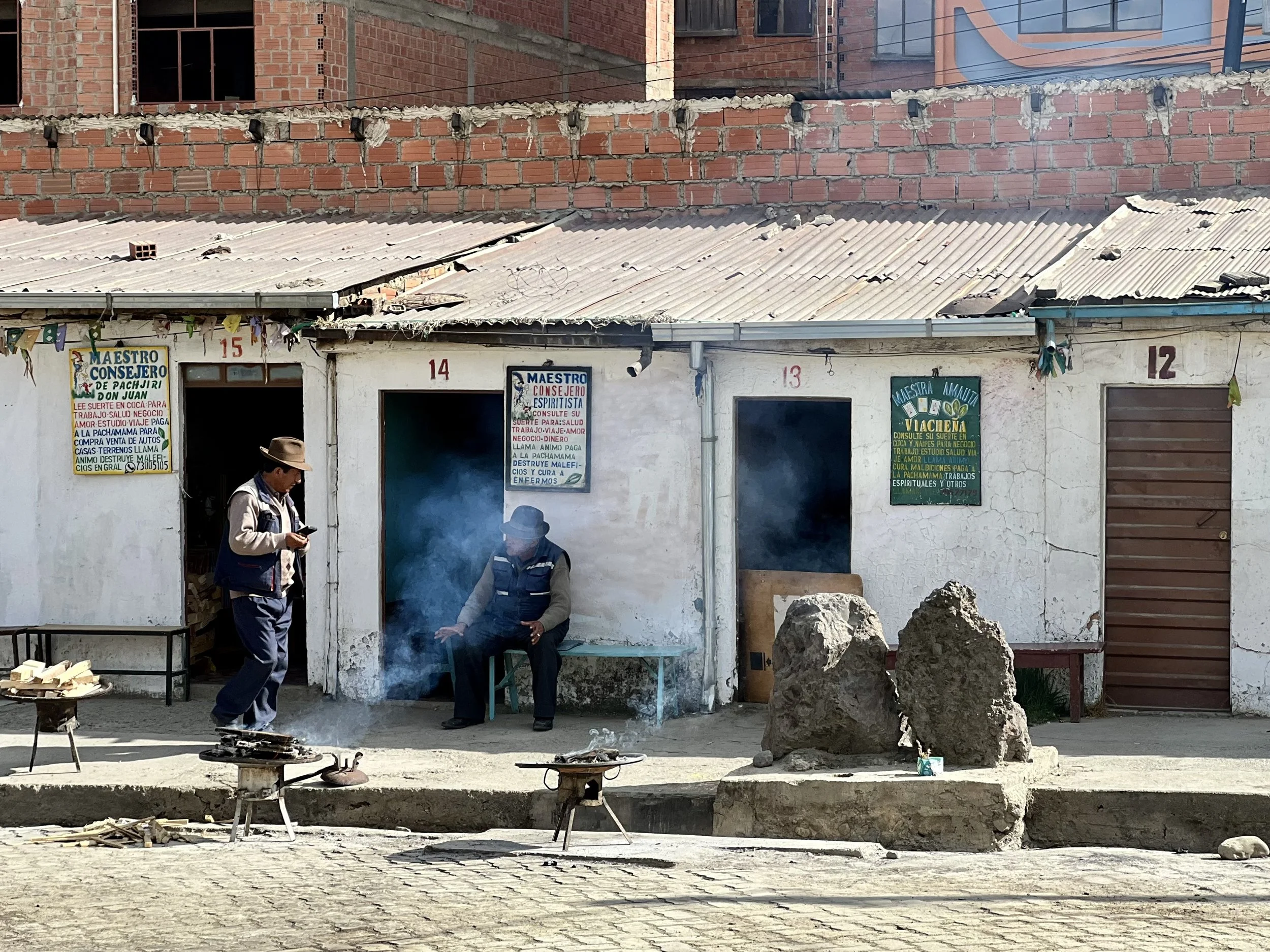
Before we go further, let us first talk about yatiris and who they are. Yatiris are the healers and spiritual guides in Bolivia. Training can be provided to become a seller in the Witches Market, but one must be called to become a yatiri. It’s still not entirely clear to me, but it seems there are 2 ways one becomes a yatiri, one of which is getting struck by lightning and surviving? The locals rely heavily on the yatiris. They visit yatiris for guidance and advice, even before going to a lawyer or doctor when situations arise.
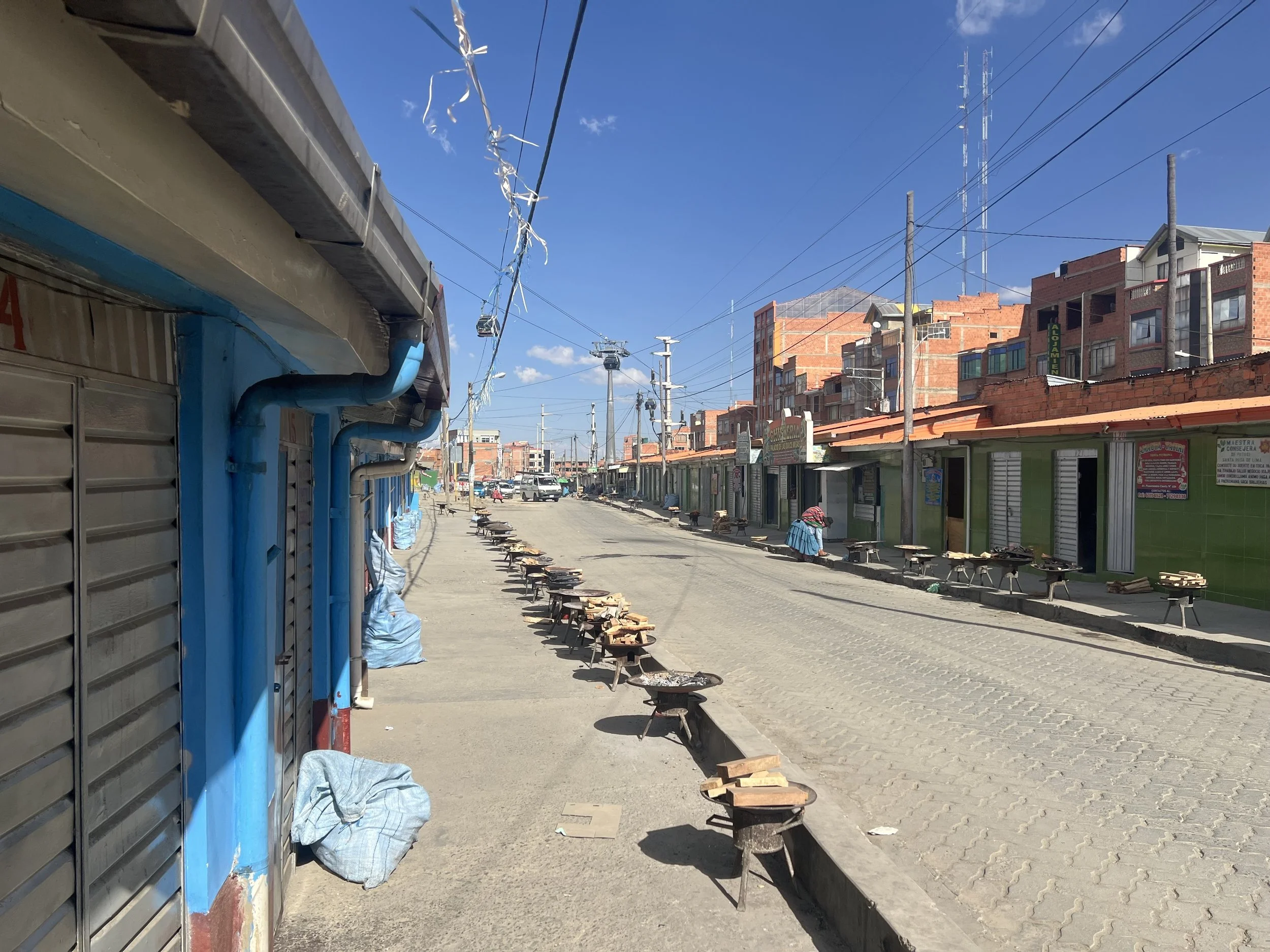
The yatiris use firewood and burn offerings for Pachamama . The area they use is meant to be close to the sky - to have access to spirits to help the Yatiri to recharge their energy.
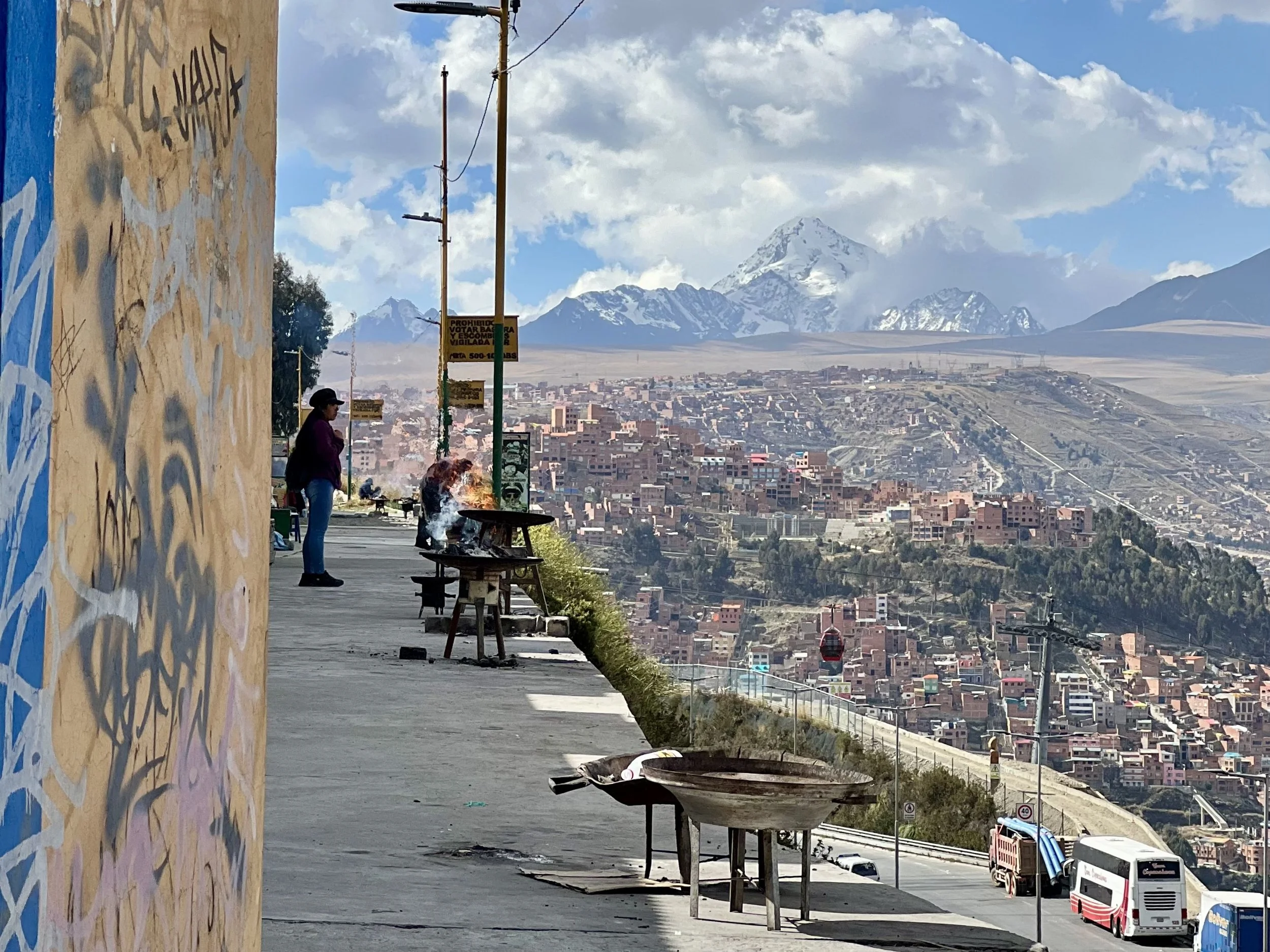
In El Alto, we walked down a street of yatiris.
A big rock or tree struck by lightning is considered sacred, called a waka? / parca?. In El Alto, there is a big rock struck by lightning more than 10 times. It was built over by the Spanish upon their arrival, but part of it has been rescued.
Ok I tried my best to capture the essence of what was shared but I couldn’t quite get the names and details down - shall search online a bit more.
Bonus story: San Pedro Prison
Have you ever heard of a prison run by the prisoners themselves? Where the families live together with the inmates the prison?
Located at San Pedro square in La Paz, the building used for the prison was initially built for a monastery, and meant to house 400 people. Today, there is a population of close to 3000 in the prison. Inmates need to pay for rent on the cells and meals in prison. As most can’t afford to pay rent inside the prison and outside at the same time, the families live with them in the prison, but are free to leave the prison twice a day.
The prison is actually organised and run by the inmates themselves. They call for elections, select their own representatives and create their own internal rules. The prison is self organised - with the agreement that if left alone, the inmates would manage themselves and would not escape. There are only a total of 27 salaried guards for the prison, and in every shift only 5 - 7 police officers. Given the shortage, they only guard the outside of the prison.
The prisoners are also entrepreneurial - for instance they made a deal with Coca cola so Coke is the only soft drink that can be sold inside the prison. There is also a form of “taxi” service in the prison. For any visiting days, those running the “taxi” service help to act as bodyguards, collecting visitors from the entrance and accompanying them to find the inmate they are looking for. There were also prison tours that used to be run starting in 1998, but that has been shut down.
Wrap ups and onwards to Sucre
From La Paz, I wanted to head to Sucre to continue with Spanish classes. One can take an overnight bus to Sucre, but I decided to fly based on my own comfort level while solo travelling. There are direct flights from Sucre to La Paz only a few times a week (IIRC it was Monday, Friday, Sunday), and flights do get booked out. Some pre planning would have been helpful here, I would suggest to book at least a week in advance. I ended up staying in La Paz a few extra days to take a direct flight, but the good thing about this was the extra day I had meant my schedule overlapped with another friend (who I had met in Namibia) who was flying in the morning before my flight! We had a nice catch up and wander around town.
Note: My proper camera was squirreled away for most of the time in Bolivia, and I did not see people with cameras out. In Bolivia, locals are generally less comfortable with photography - of themselves and also of their store items. In one case, a lady pulled a cloth over her bread products after some of us started taking phone photos of it - even though we were with our Intrepid guide at the time and she was introducing the store to us. According to the guides, it is not because of any spiritual or religious beliefs (e.g. worried about losing their souls if they have a photo of themselves taken). It is just something that they are not used to / do not like. So take broader landscape photos rather than direct photos of stores or people. Some stores are more used to having tourists and thus have arrangements with the guides, in these cases they may be open to having photos of their products taken. If in doubt, you can try asking for permission. It is also seen as acceptable in certain touristy places e.g. the witches market in La Paz.