JOURNALS: Warming up in Sucre, Bolivia
Flying out from La Paz at night to Sucre
La Paz and El Alto were brightly lit, with a warm orange hue. As we flew over the outskirts of the town and the view faded to black, I had to remind myself that Bolivia is a landlocked country and that we were flying over land rather than sea (Bolivia used to have territory which accessed the coastline, but this was lost to Chile in 1884 after the War of the Pacific https://www.bbc.com/news/world-latin-america-45708671). Flying in the dark, we also passed by Cochabamba, which gleamed in the distance. The vast swathe of darkness in between these areas was a reminder of the distances between these key cities.
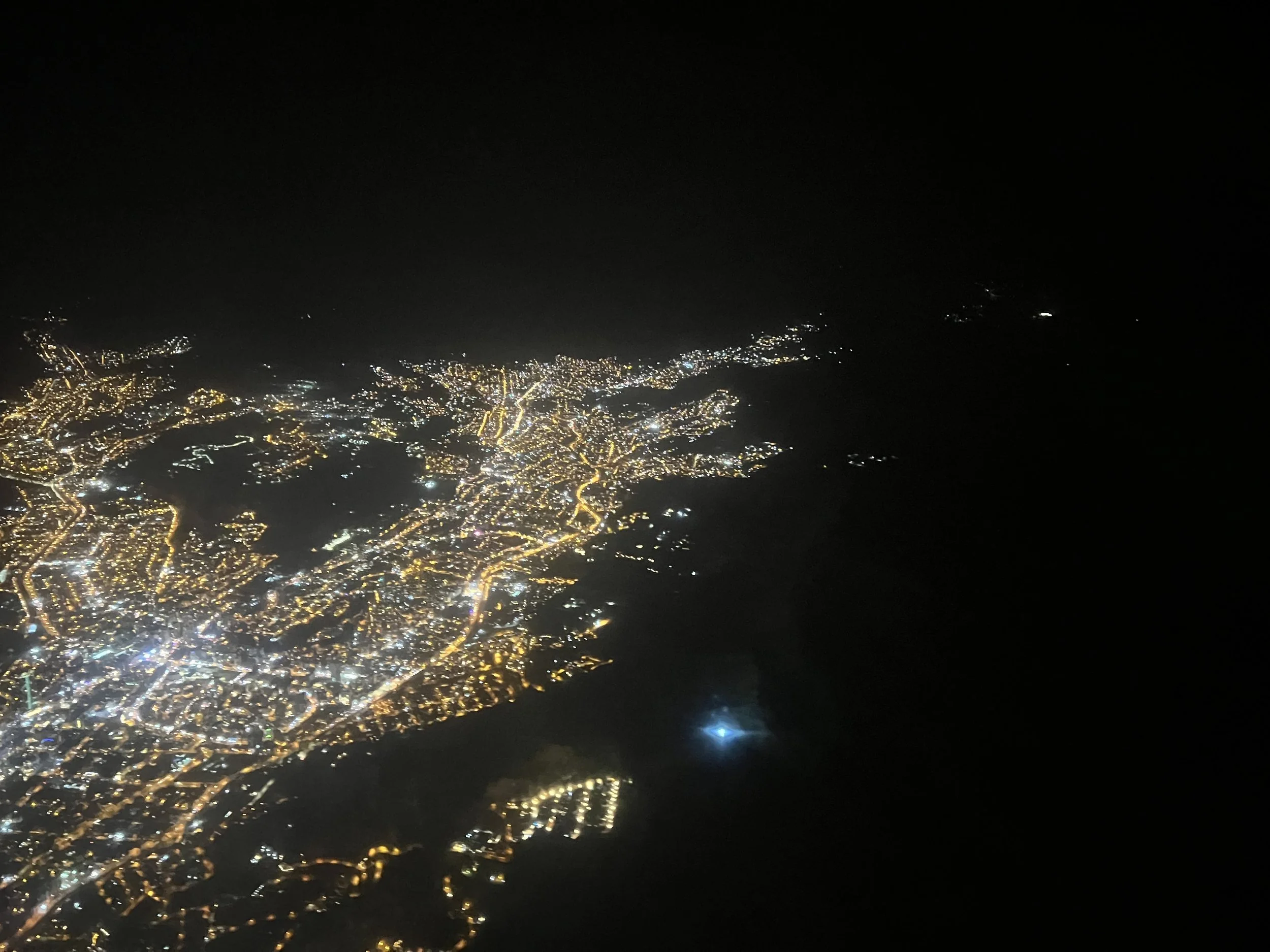
As we passed Sucre - there was a distinct white line against the black, almost like a river of light. This turned out to be the road leading from the airport to the town centre of Sucre. The road seemed to be quite newly built, and it was a smooth ride into town.
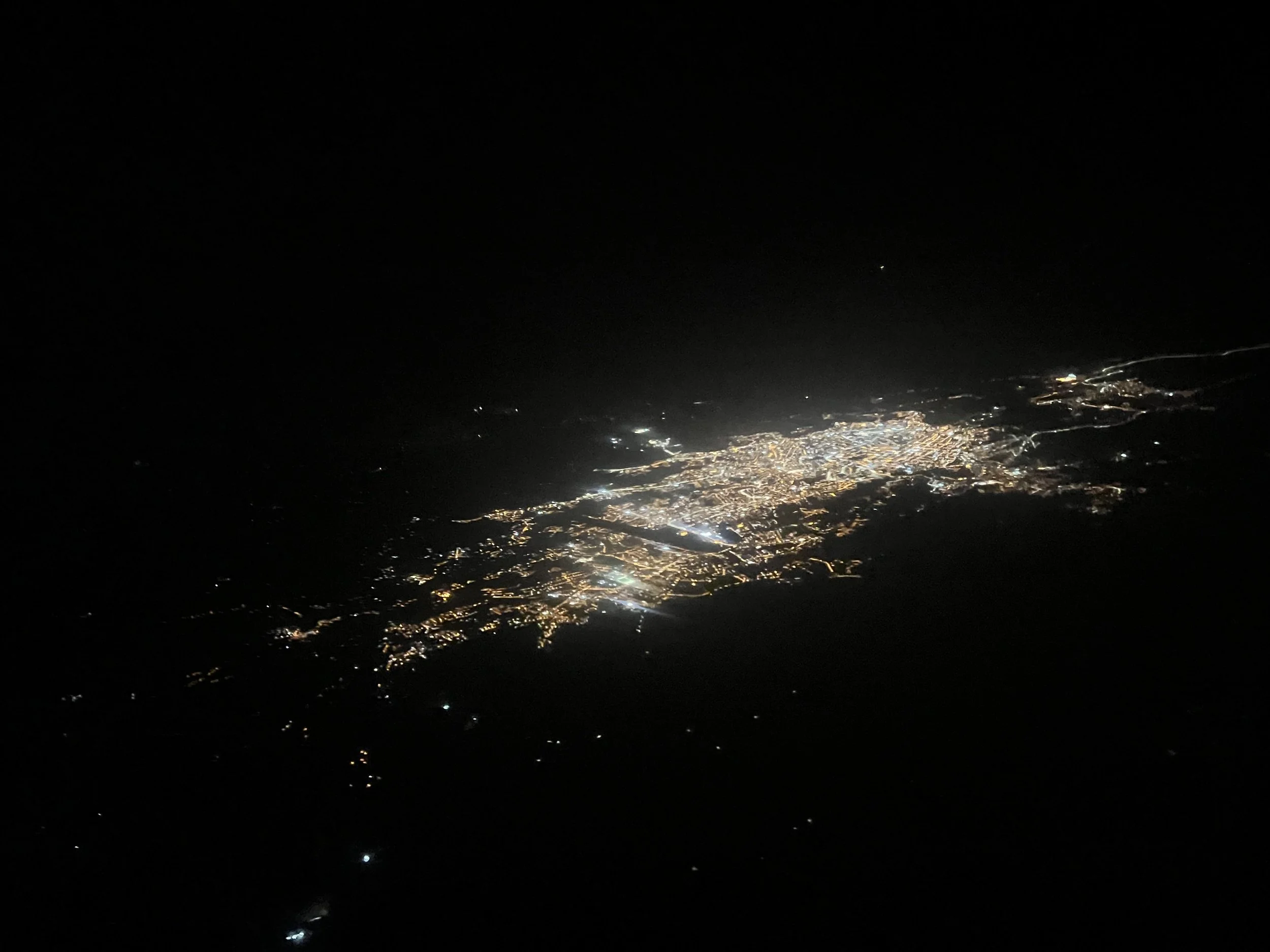
Sucre from above
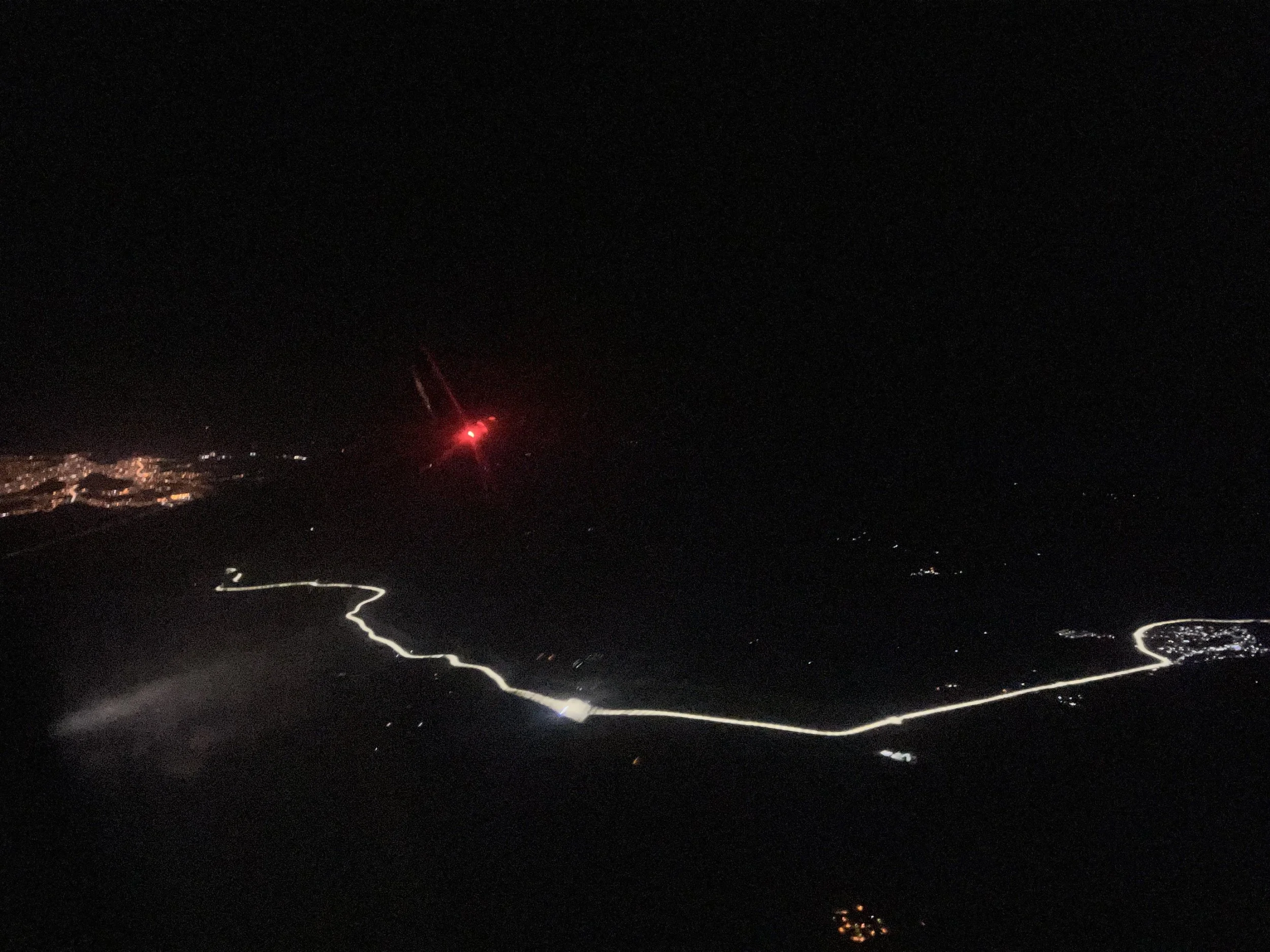
The road from above
The white city of Sucre
Sucre was founded in 1538. Nearby Potosi was experiencing a silver mining boom, and Sucre was used as the centre due to its favorable climate compared to the cold conditions in Potosi. As every website on Sucre will tell you, the city of Sucre has had four different names over time. It was first known as Charcas, before the Spanish conquest. Upon their arrival, the Spanish called Sucre Ciudad de la Plata, or the City of Silver. The name was later changed to Chuquisaca, which is what the broader area is now called. The name Sucre has been in use since 1839, when it was adopted after Bolivia’s independence to honour the liberator Antonio José de Sucre. Sucre himself was the first president of Bolivia after its independence in 1825.
Sucre is the historical (and current) capital of Bolivia, and holds the judicial power. However, La Paz actually holds the legislative and executive powers of the country. In the late 1900s, due to the discovery of tin near La Paz, La Paz grew in its wealth. With that, a new political party was formed. The Liberal Party from La Paz made an alliance with the indigenous and won the fight against the Conservative Party from Sucre in 1898. La Paz thus took the executive and legislative powers wheres Sucre kept only the judicial power. La Paz thus became the administrative capital of Bolivia.
Today, Sucre is also known as the White City due to its colonial architecture, and is a UNESCO world heritage site. Many backpackers travel to Sucre to learn Spanish, given the affordable cost of living, and warmer climate compared to other parts of Bolivia. In particular, I heard from locals that many travellers come from Europe, especially France and Germany - they say that Sucre reminds them of the towns back home.
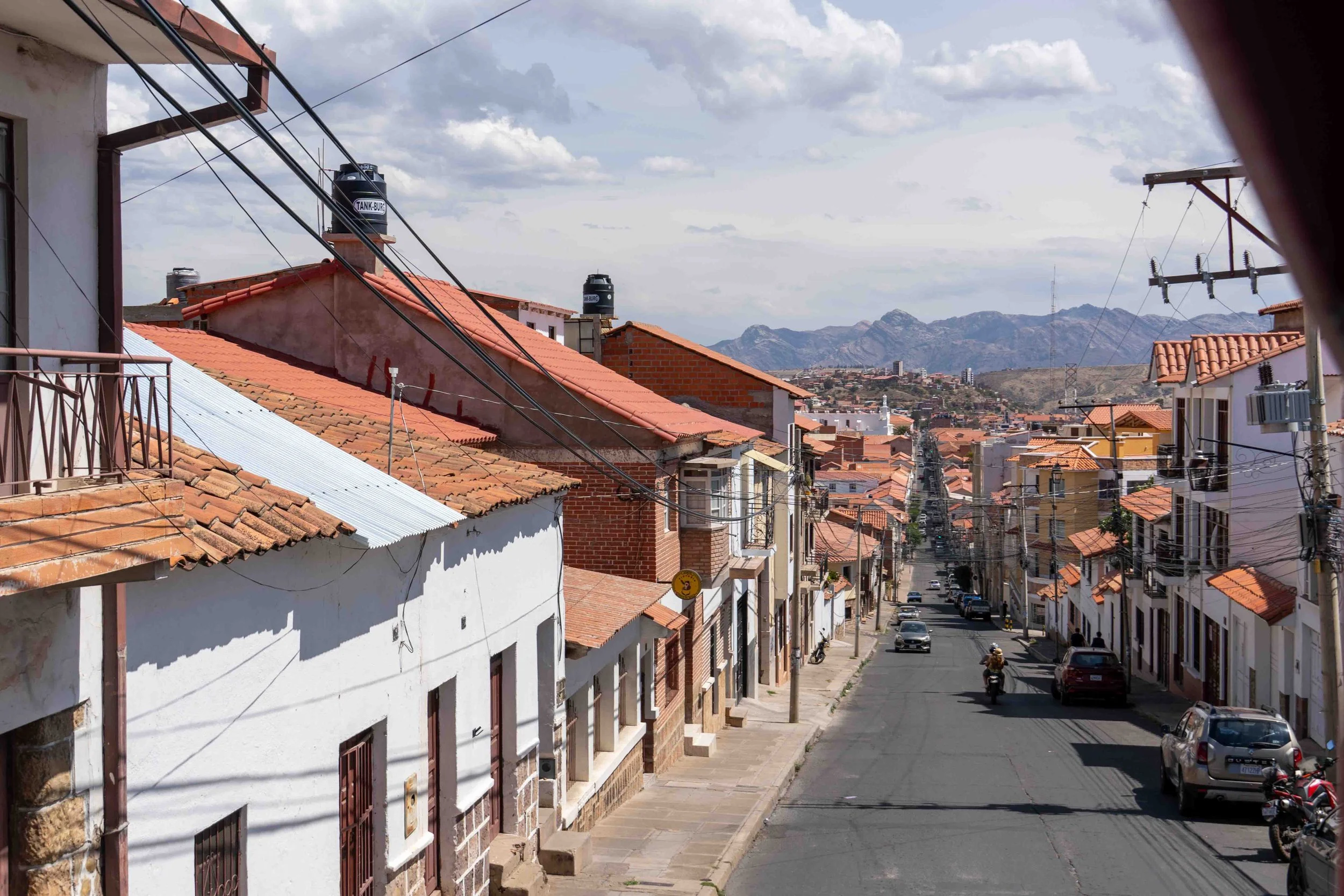
Warming up to Sucre (both metaphorically and literally)
In Sucre, you can feel more Spanish influence, and there was much less of an indigenous presence compared to La Paz. Unlike in La Paz, there were no ladies walking around in the traditional Aymara dress. There was also a large modern supermarket near my homestay in Sucre, with a food court and a cinema - something I had not come across where I was staying in La Paz.
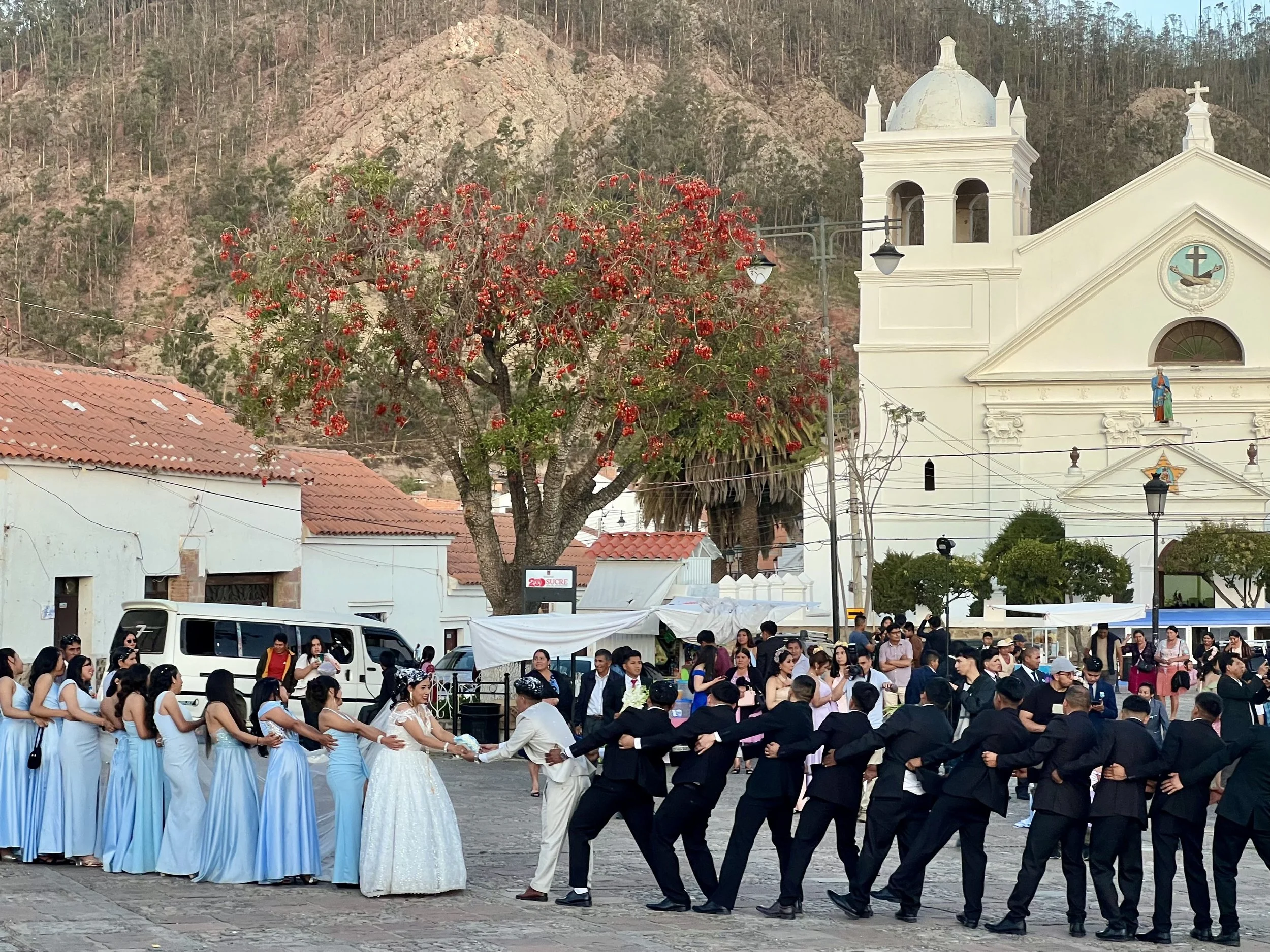
I spent my first day in Sucre at an excellent walking tour thanks to May who I found through Guruwalk. As we headed up to Plaza Pedro de Anurez around sunset, she shared that the next day (the 21st of September) was the Day of Love (dia del amor). At the square, we counted a total of 9 wedding couples and their guests, taking photos and celebrating. Sucre is indeed filled with festivals, fiestas and celebrations. In the short time I was there, roads around the main square, Plaza de 25 Mayo, were closed a few times for parades. And the following weekend, there was another fiesta at Plaza Pedro de Anurez.
Places I visited in Sucre:
Plaza Pedro de Anurez
Central Market
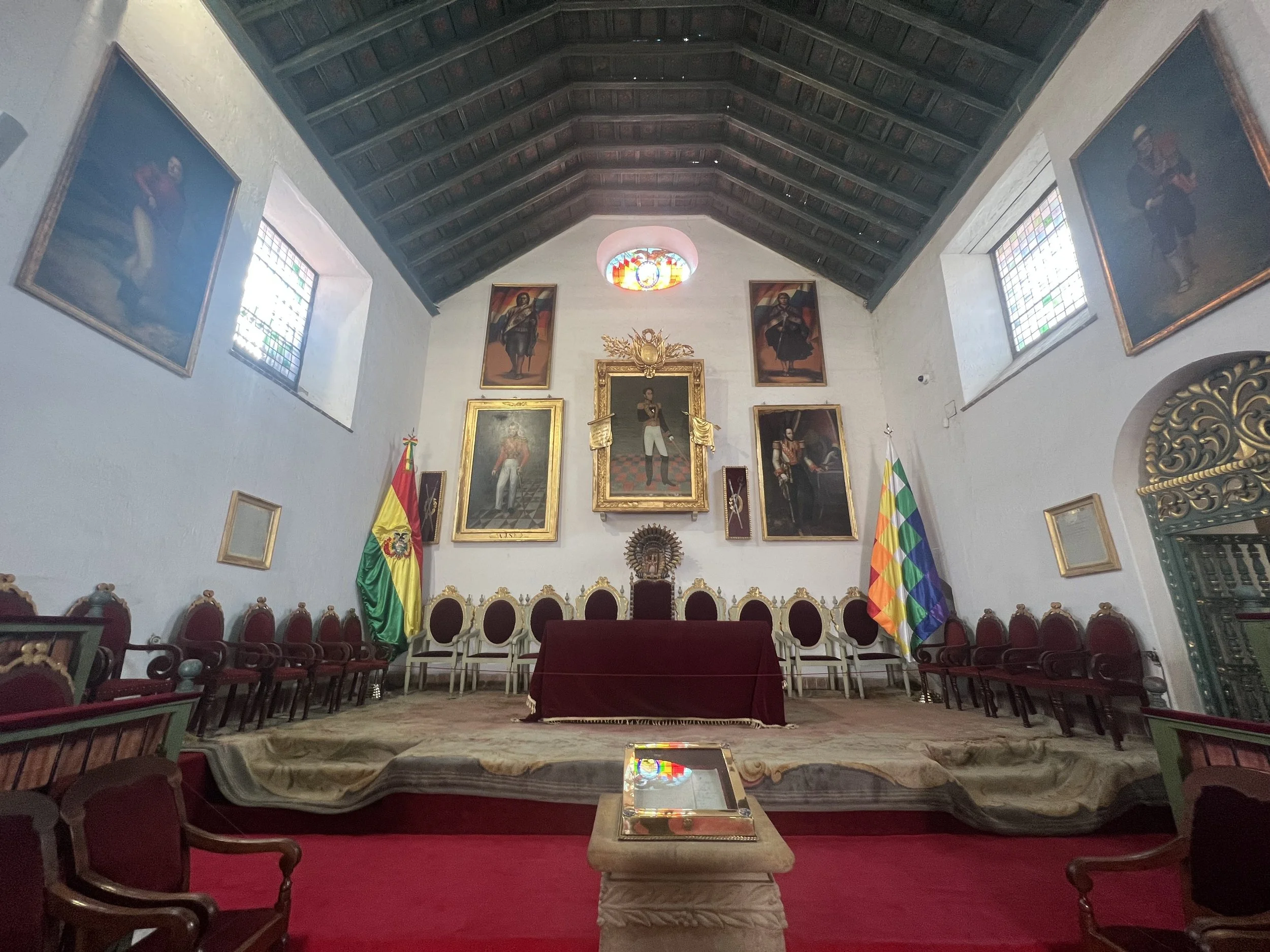
Casa de la Libertidad (in picture)
Museo de Indigenous Arte
Parque Cretacico
Teatro Gran Musical
Cementerio Central Sucre
At the start, Sucre seemed like a quiet little place, and when I first arrived I questioned what I would do and how I would spend my time there. But as I stayed the week I grew to explore more of it, and heard tips from my homestay family and teachers in the school on what to do. I suppose for less touristy places (in general I do think Bolivia is still on the less touristy side other than the Uyuni salt flats) - there is more limited information online, but if you spend some time you can gradually find out what the gems are. In particular, it was fun to check out the fiestas, with the crowds and food stalls. I also really enjoyed attending a dance performance at the Teatro Gran Mariscal, to celebrate Bolivia’s bicentennial. The performance consisted of dances from each of Bolivia’s different regions, and the elderly man sitting next to me was friendly enough to make conversation in spite of my basic Spanish, and provided me with extra information on the places as the concert went along. I was also introduced by my Spanish teacher to a few local companies that organise day hikes and trips out to nature sites - I would have loved to do this if I had the extra time.
Sucre also had great cafes with lovely desserts, and I would pop somewhere for a cake and a coffee almost every day. Other things I did include visiting Parque Cretacico to see dinosaur footprints. For this visit, there is a tourist bus from the main square which brings you there. I also paid an impromptu visit to the Museo de Indigenous Arte, which was surprisingly well set up for tourists with English guidebooks provided. And I made sure to visit Casa de la Libertidad where you can see the signature of Bolivar on the declaration of independence. There is an English tour provided for free as part of your entry — it is not the most comprehensive (our guide had limited English) but it was still somewhat helpful. The timings are not publicised online - I happened to walk in right to the musuem right at the start of the tour, but otherwise you might just need to head in to ask.
I also learnt Spanish here for a week. Personally, I preferred the Spanish classes in Antigua, Guatemala compared to the ones here. My teacher in Antigua was fantastic and was very able to tailor the class to practice the skills I needed. In comparison, I felt like the teacher in Sucre was following the syllabus, and she often spoke to me in English. I would try to ask her how to phrase a question in Spanish “como se dice xx”, but she would often respond to the question in English instead, and I needed to prod further to find out the same phrase in Spanish. However, there are many other teachers and schools in Sucre so its still worth trying, and of course your dollar will go much further in Sucre compared to in Antigua.
The warmth of a homestay family
I actually spent the first portion of my time in Sucre sick. I was even feeling out of breath when resting and lying down, which concerned me after my experience with pneumonia in Kazakhstan. On Sunday, the fifth day of my illness + my second day in Sucre, I made my way to a clinic and was diagnosed with Salmonella. Walking to the clinic was a STRUGGLE - although it was only 15 min away, part of it was uphill and I felt winded.
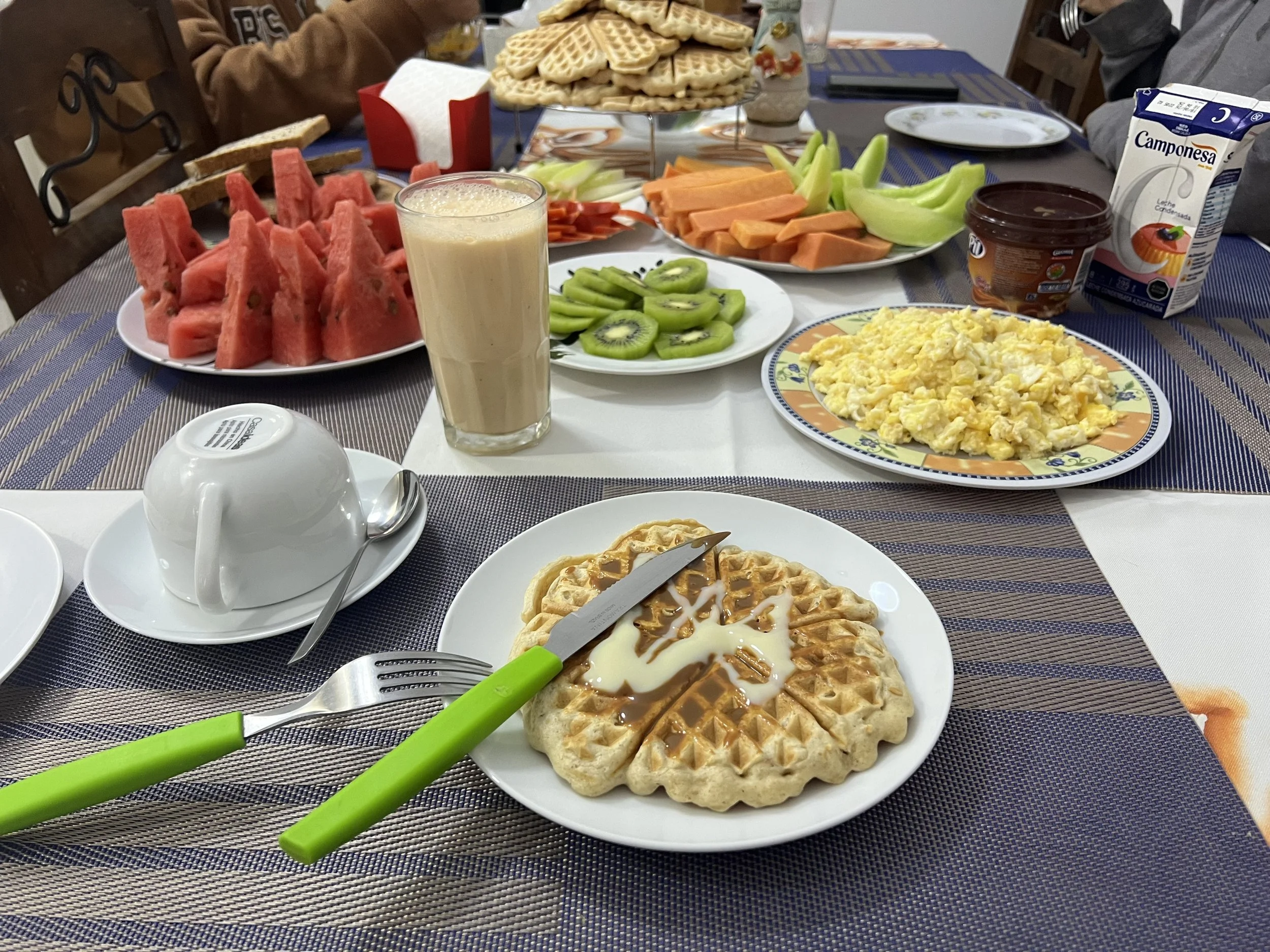
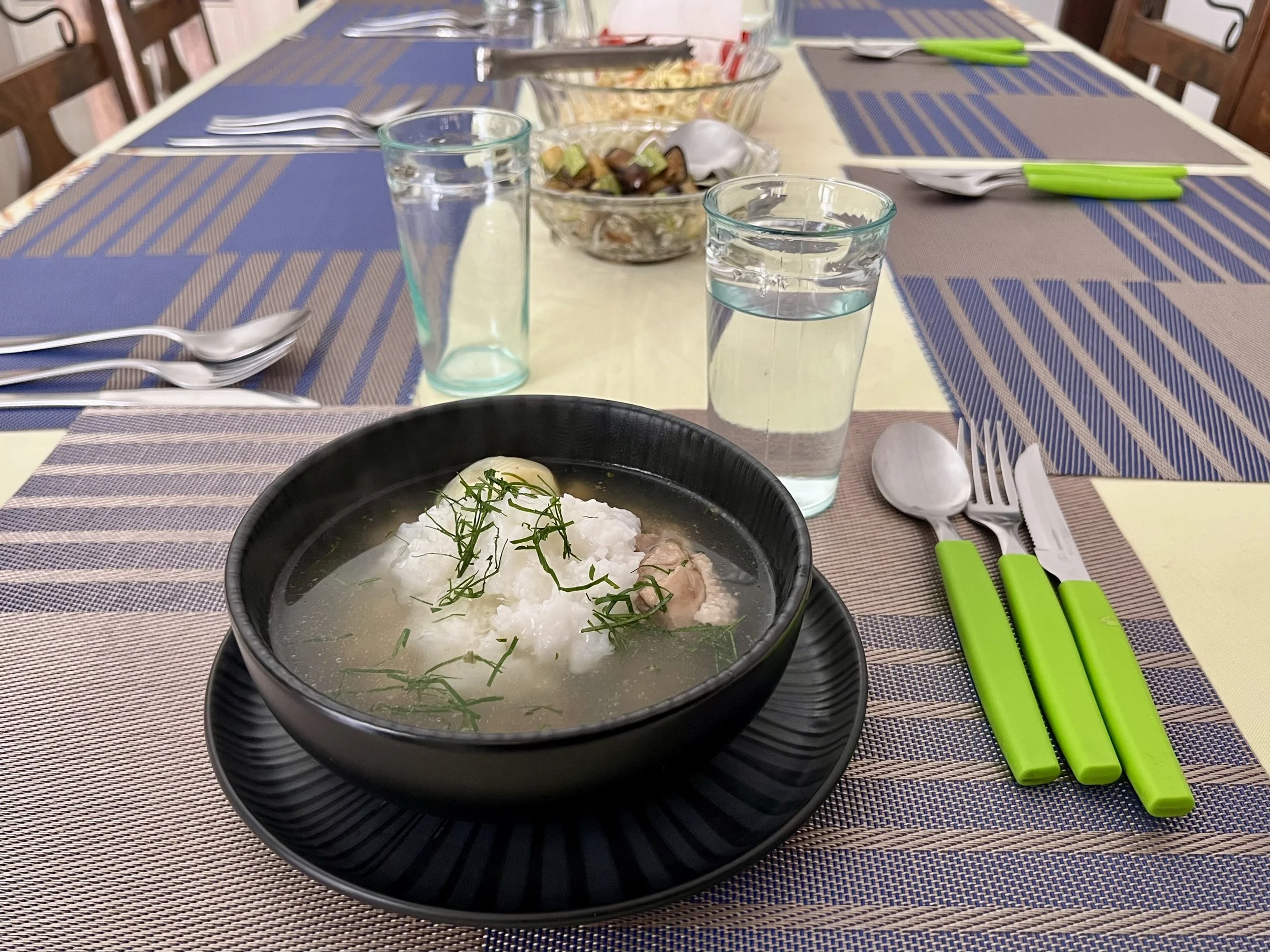
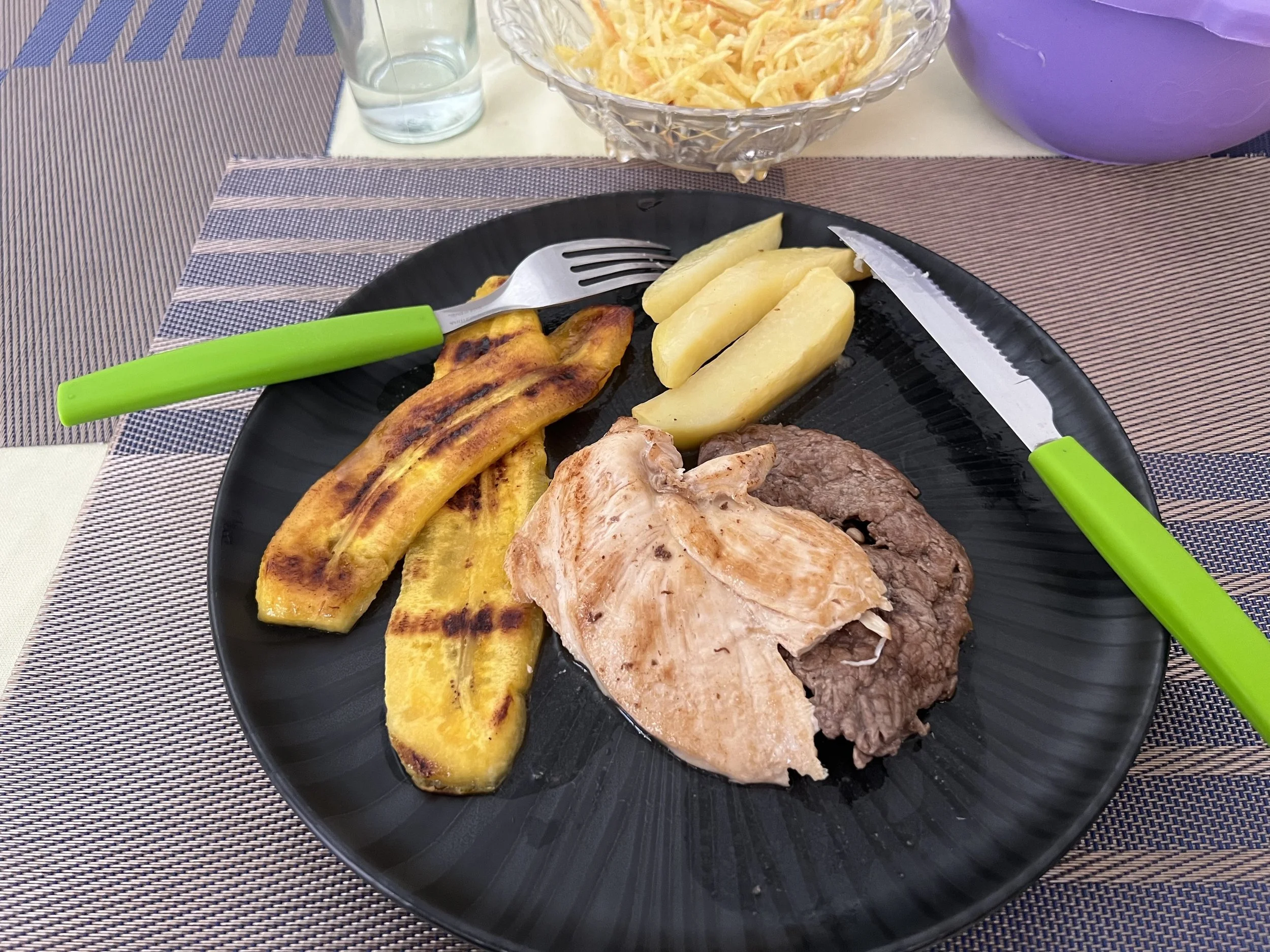
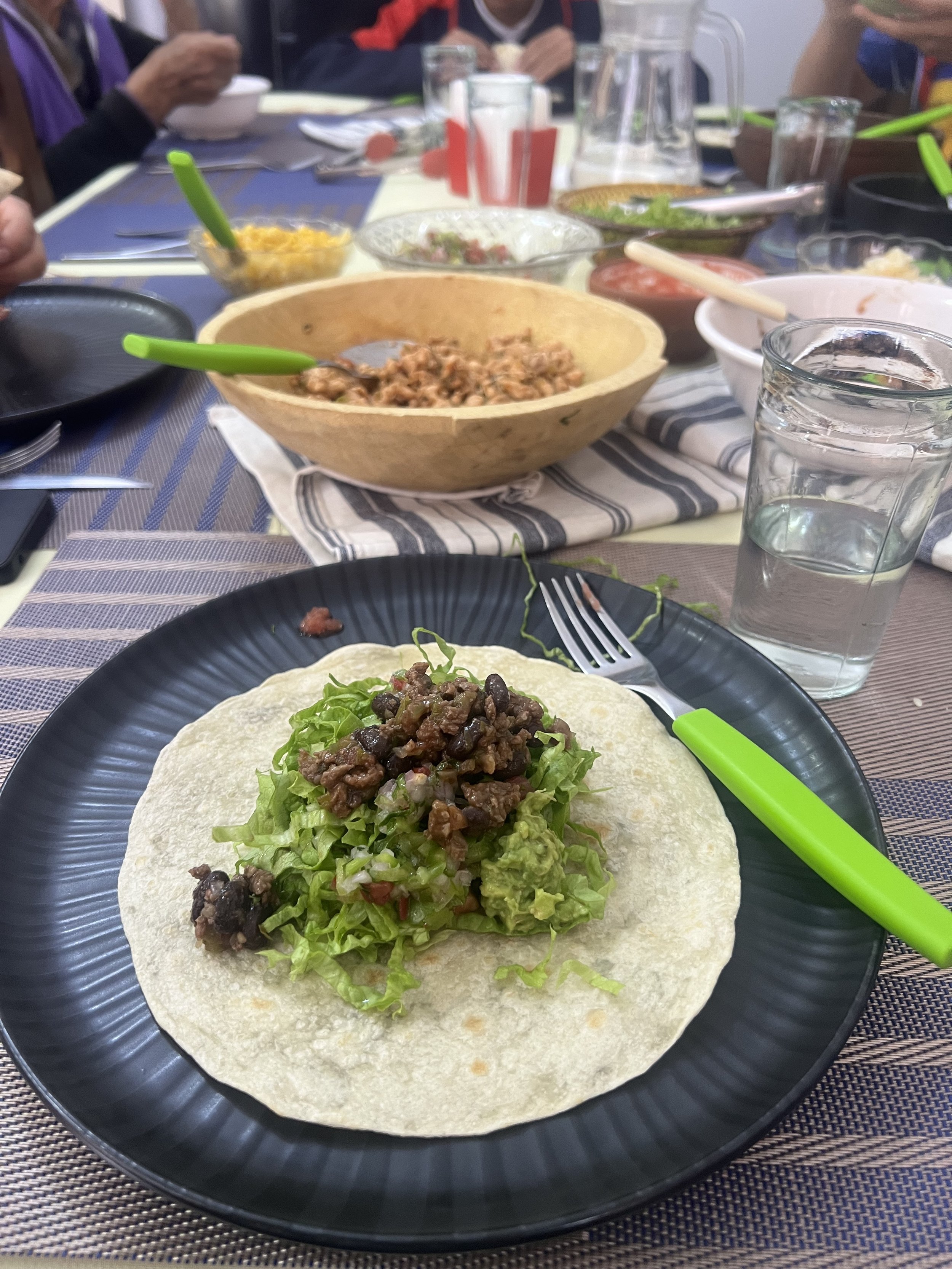
When I moved into my homestay, I was worried the family would be concerned about having me in the house since I was unwell. However, the homestay hosts were extremely kind, and even offered to prepare “cleaner” (more plain, no sauces) food for my stomach. They treated me like family and really fed me up. Truly the best way to recover after an illness. Every morning, they would check if I was better (“Mejor?”). There would be a huge stack of either oatmeal pancakes and waffles on the table, together with a whole platter of fruits AND a freshly squeezed glass of fruit juice. They would also offer me eggs, and coffee or warm water. At lunch, it would be a bowl of soup (I love soup! and the soup on the first day had rice and some chicken inside, it was like porridge and so comforting), followed by a meat with mash or chips. One day, we also had Bolivian tacos which was delicious! In Bolivia, lunch is the key meal that they have with family - whereas dinner is less important and they may have it seperately - so slightly different from what we have in Asia where dinner is very important.
On my last Sunday, I also followed the host family to a volleyball game that their niece was in, before we all headed to the food court with the WHOLE family for a big lunch outside. The family was large so we joined 3 tables at the food court.
It took a while, but I did slowly grow to be comfortable in Bolivia. I didn’t love it at the start with falling sick, and I didn’t love the Spanish school I much preferred the one in Guatemala, but I did grow to enjoy and appreciate it. And thank you to mi familia de Bolivia!