JOURNALS: A few hours in Santa Cruz de la Sierra, Bolivia
Although rarely mentioned when it comes to tourism, Santa Cruz de la Sierra has grown to become Bolivia’s largest city and economic powerhouse.
I only had a 12 hour stopover in Santa Cruz BUT it is worth mentioning because it was thoroughly unexpected. Santa Cruz is the economic centre of Bolivia, and yet I had not heard about it until I needed to arrange my flights.
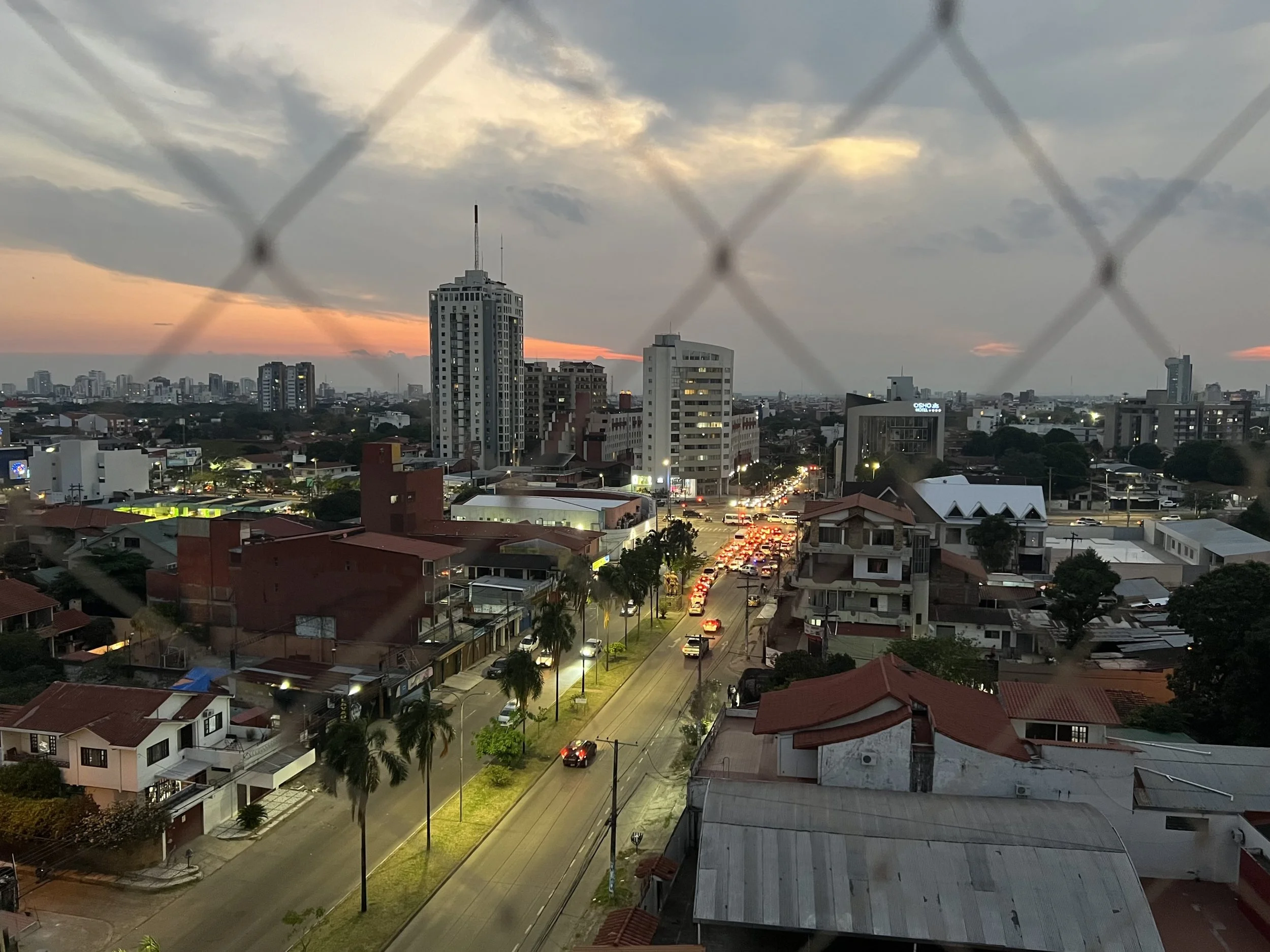
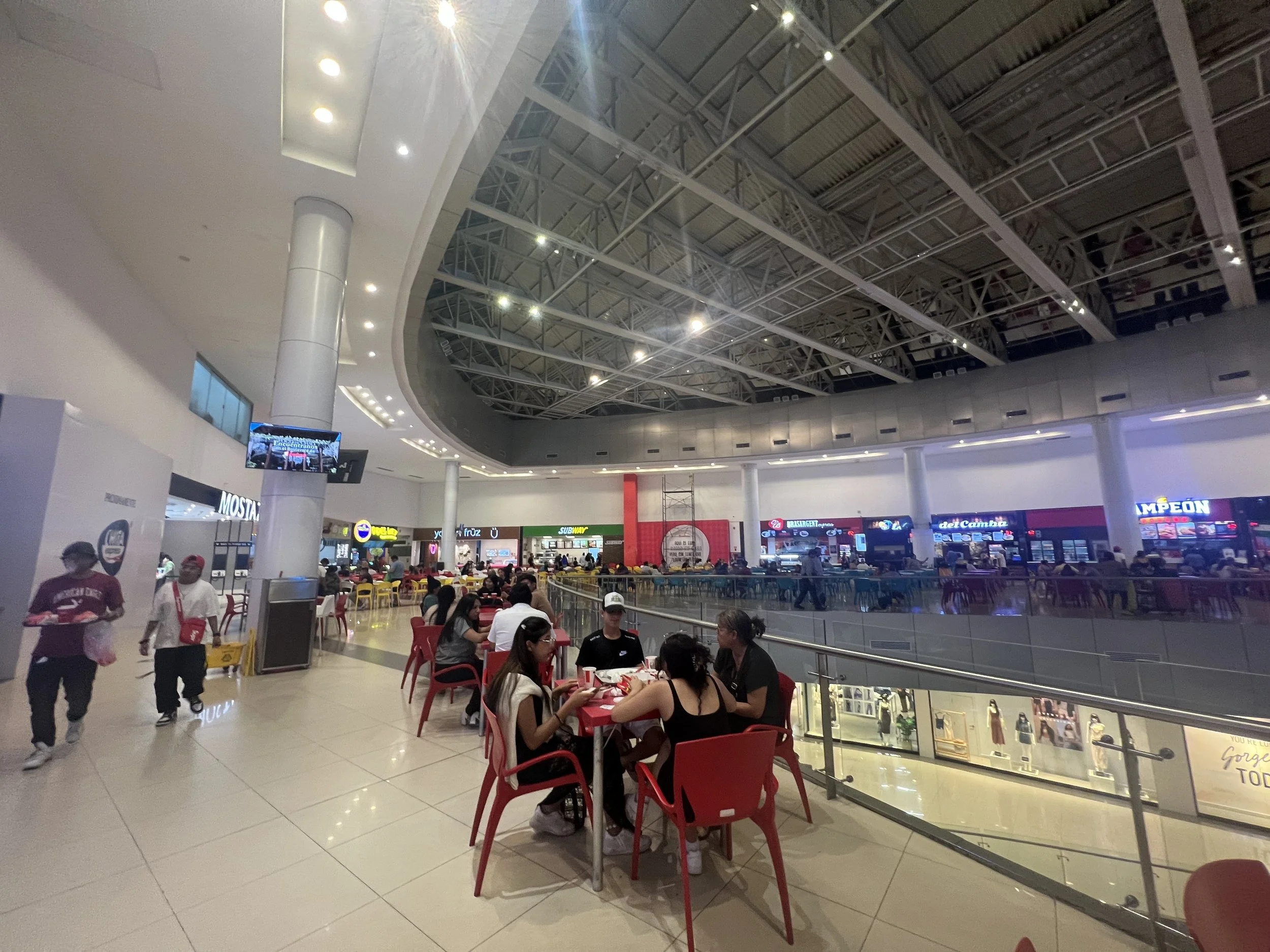
I had initially planned to book an airport hotel for my layover, but the night before I flew, my homestay host suddenly video-called her daughter who was studying in Santa Cruz and asked if I would like to meet her. They were so kind! Her daughter and her family friend hosted me there, and even provided me with a spare room to rest before my flight. My homestay family had warned me many times that Santa Cruz would be hot and humid - but when I reached it felt so much like the weather back home! A warm environment with a slight breeze. And yes of course after a month with no insects I received a mosquito bite while waiting for the daughter of my homestay family, but after a few weeks of cold weather it was indeed welcome. It did not feel like I was in Bolivia anymore, the city felt like it could have been something out of Asia. For dinner, we took a cab to a mall, which was super modern and really just looks like any other mall in Singapore. We went to the food court (patio de la comida) in the mall, where I tried majadito.
I had never heard of Santa Cruz before my trip, much less its role in Bolivia’s economy - so I wanted to add a little extra information here. Many international flights go through Santa Cruz airport, so it is a possible route to take when visiting Bolivia. Viru Viru international airport in Santa Cruz is actually the country’s busiest airport. International flights from La Paz are actually quite limited, only going to Peru and Colombia, whereas from Santa Cruz you can even fly directly to Europe.
Santa Cruz is the largest city in Bolivia, with a warm and humid climate compared to the rest of Bolivia as it is much more low lying at only 416m. Santa Cruz was founded in 1561, but growth in Santa Cruz only really took off since the 1950s. Mongabay has a good write up of why this is the case. From 1932 - 1935, the Chaco War took place between Bolivia and Paraguay, resulting in Bolivia losing 30% of its national territory. Hence, with support on strategy from the US and investments from multilateral agency, from the 1940s Bolivia focused on development of its eastern lowland territories. From 1950s onwards, roads were developed linking the Andean highlands with the lowlands in Santa Cruz, Cochabamba and La Paz. The government also promoted the migration of indigenous in the highlands to the lowlands, with a large portion of them moving to the alluvial plain of Santa Cruz to leverage its ideal climate for tropical agriculture. The city of Santa Cruz de la Sierra has thus grown exponentially since the 1970s.
Today, Santa Cruz contributes 35% of Bolivia’s GDP and receives most of the FDI going into the country. The metropolitan area in Santa Cruz de la Sierra hosts industrial, agricultural, forestry, mining and hydrocarbon sectors. Santa Cruz is a major hub for agriculture in Bolivia given its appropriate land and climate, with farms for soybean, cattle and citrus as well. The agriculture in the plains of Santa Cruz is a more modern system, different from the traditional one practiced in the highlands.
As Santa Cruz continues to grow and develop, it is looking for more political clout as well. Write up by Reuters on what is happening in the country: https://www.reuters.com/world/americas/power-struggle-divides-bolivia-soy-rich-santa-cruz-demands-more-clout-2022-11-21/.
When researching on Santa Cruz, another item that caught my attention was that of deforestation due to Bolivia’s soy industry: https://trase.earth/insights/deforestation-and-climate-change-threaten-bolivia-s-soy-sector
For those visiting Bolivia for the first time, Santa Cruz de la Sierra may be a good first stop to make, particularly given the flights into Viru Viru airport. Beyond experiencing the city life and its role in the economy, there are also several national parks and nature areas which can be reached from Santa Cruz de la Sierra to experience the biodiversity of the country. This blog here provides a little more colour on visiting Santa Cruz: https://www.alongdustyroads.com/posts/2016/4/14/santa-cruz-bolivia-guide-things-to-do-backpacking-activities
Sources:
https://news.mongabay.com/2024/12/bolivias-internal-colonization-and-its-march-to-the-east/
https://www.iges.or.jp/en/vlr/santa-cruz
https://www.bolivia-us.org/upload/elibrary/SantaCruz-Spirit-of-Success-Forbes-Magazine.pdf
https://www.sebol.org/bcde9/explore/
https://latamfdi.com/investing-in-bolivia/